

A former samurai castle town, Matsushiro Town is an easy side-trip from Nagano City. Explore its historic streets, castle ruins, and well-preserved traditional residences. Or, try your hand at various martial arts at a former military academy built for samurai youth.
This town was once the home of the Sanada Family, a powerful clan who ruled the northern part of the Shinano Province for ten generations. Originally based in what is now modern-day Ueda City, south of Matsushiro, the Sanada Family took over Matsushiro in the 17th century during a period of peace ensuing the end of the Warring States period.
Matsushiro Travel Guide
Location and Access
The town of Matsushiro is situated southeast of Nagano City just behind the Nagano IC exit of the Joshin-etsu Expressway. It is accessible by car or by bus departing from the bus stop in front of JR Nagano Station.
By Car
Get off at the Nagano IC Exit of the Joshin-etsu Expressway and park your car at the Old Matsushiro Station.
By Bus
Take the No. 30 Alpico bus from the No. 3 platform of JR Nagano Station’s Zenkoji Exit and then ride for 30-40 minutes to Old Matsushiro Station. One way fare is 660 yen.
When to Visit
The historical sites of Matsushiro can be visited any time of year, their appearance changing subtly with the seasons. From early through mid-April, Matsushiro Castle Ruins and Kawanakajima Old Battlefield are popular places for cherry blossom viewing. In summer, verdant greenery contrasts with the dark wood and tiles of its samurai residences. In early November, brilliant fall foliage decorates their gardens, particularly the fiery red maple leaves of the Jozan Yamadera Historical Residence.
Events
For two days on the second weekend of October, the Sanada Jumangoku Festival takes place at the castle ruins.
Things to do in Matsushiro
Visit Matsushiro’s Historic Sites
Matshushiro Castle Ruins
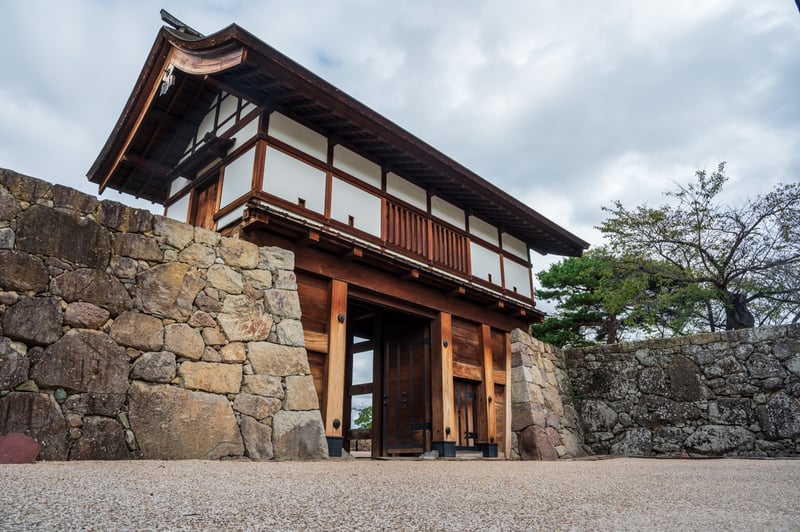
Inside Matsushiro Castle Ruins
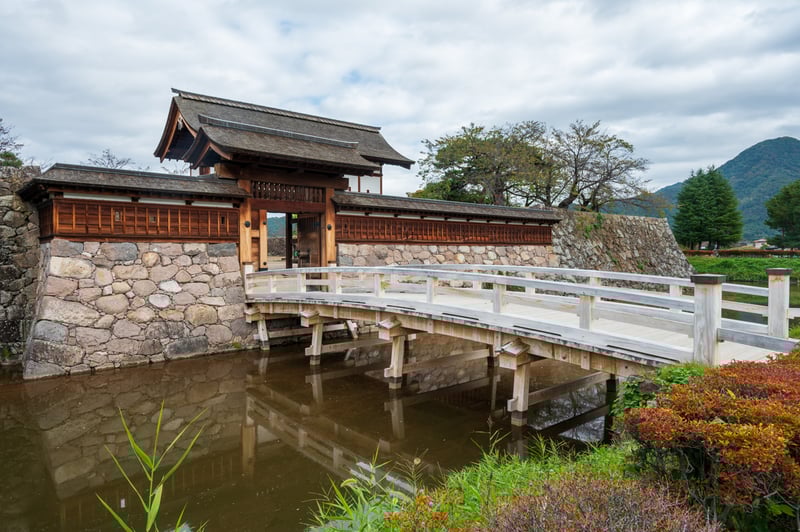
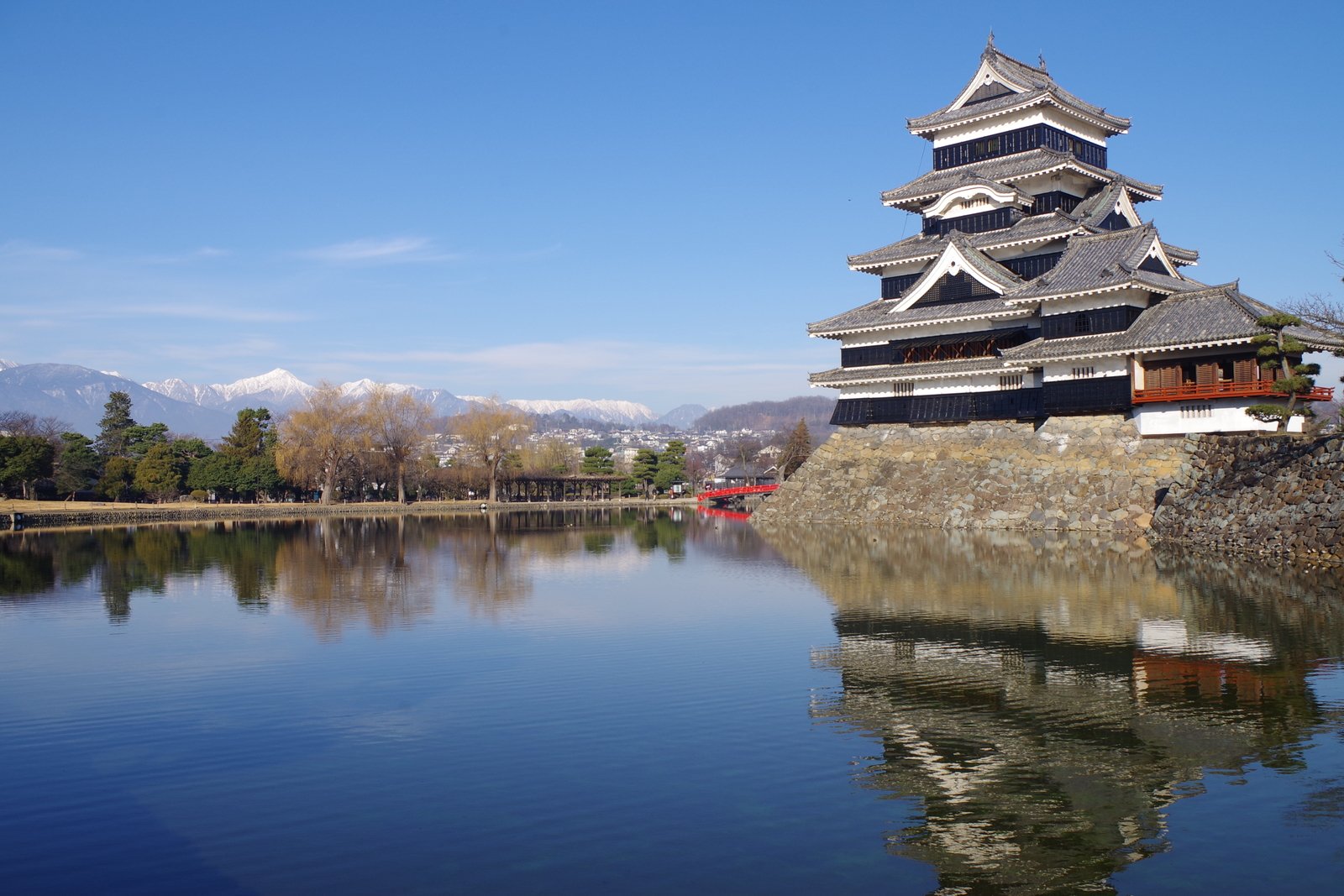
A moat surrounds the entrance to Matsushiro Castle Ruins
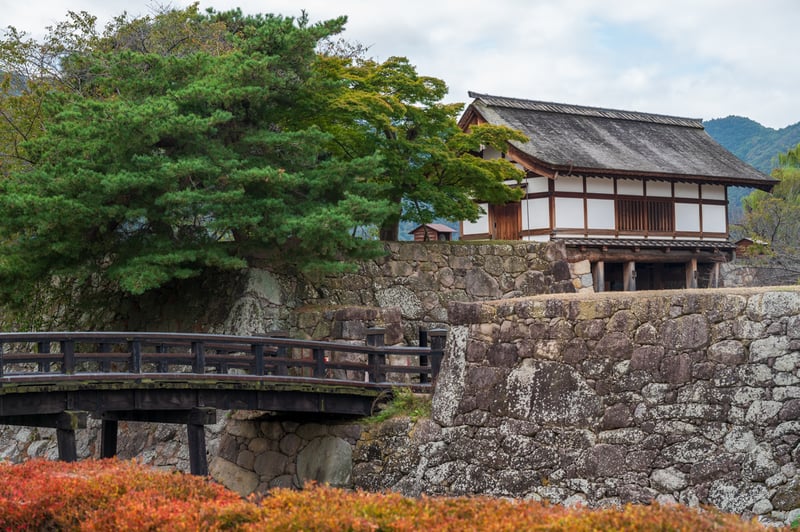
Another entrance to Matsushiro Castle Ruins
While no longer standing, Matsushiro Castle was built by Takeda Shingen during the Sengoku Period (Warring States Period), a time when Japan was in a constant state of conflict and divided up into many domains controlled by daimyo warlords. The castle and region were later overtaken by the Sanada clan in 1622, who ruled for ten generations up until the Meiji Restoration. Throughout history, the castle was destroyed and reconstructed multiple times. In 2004 the grounds stone walls and gates were faithfully restored.
Former Sanada Residence
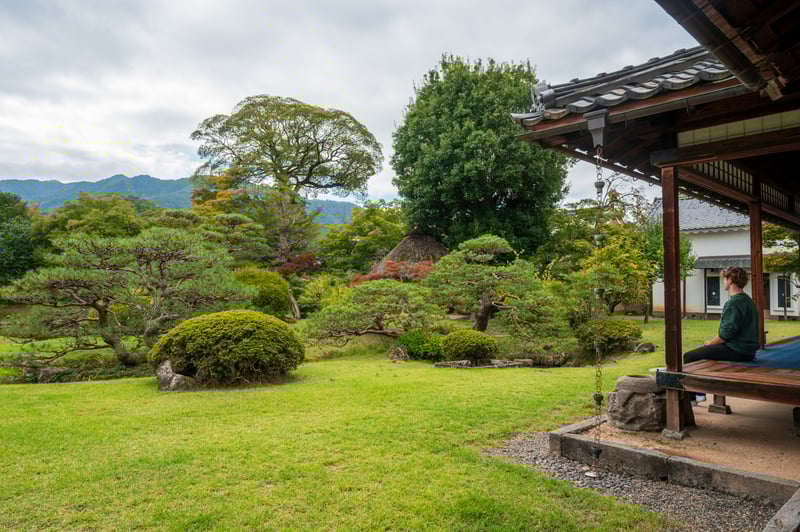
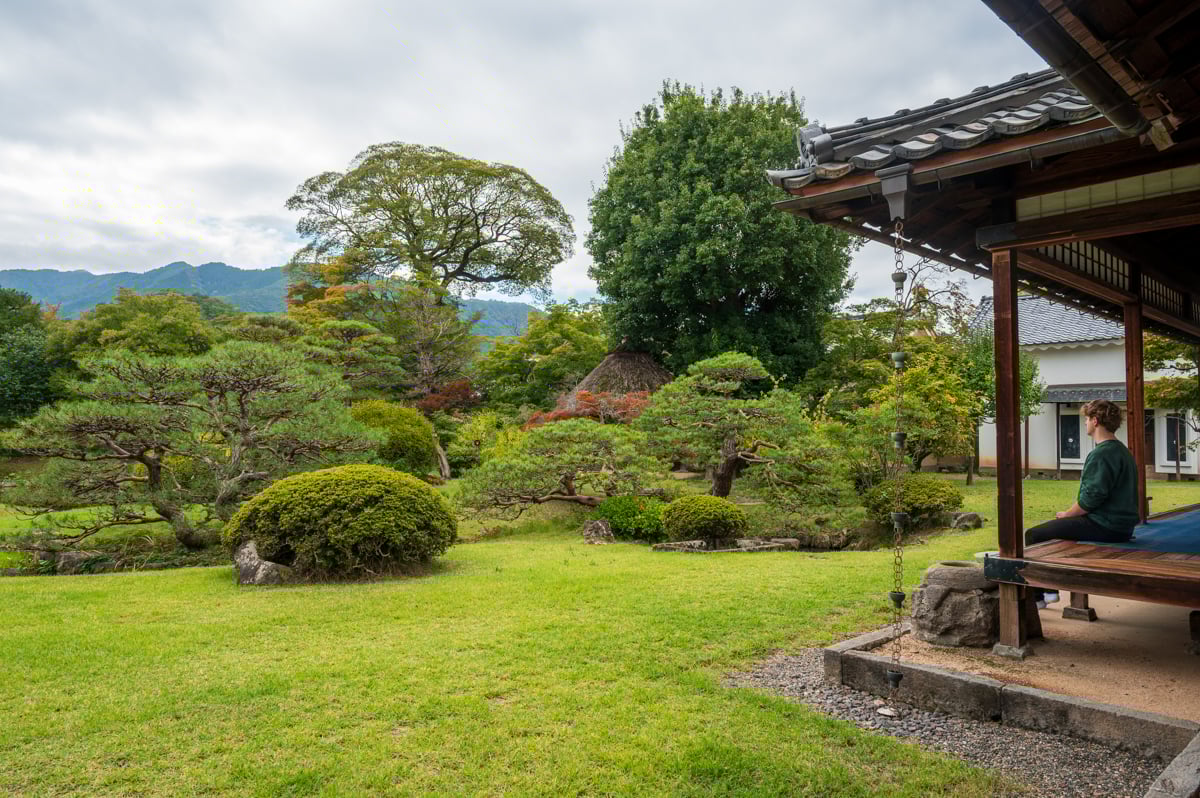
The landscape garden at the Former Sanada Family Residence
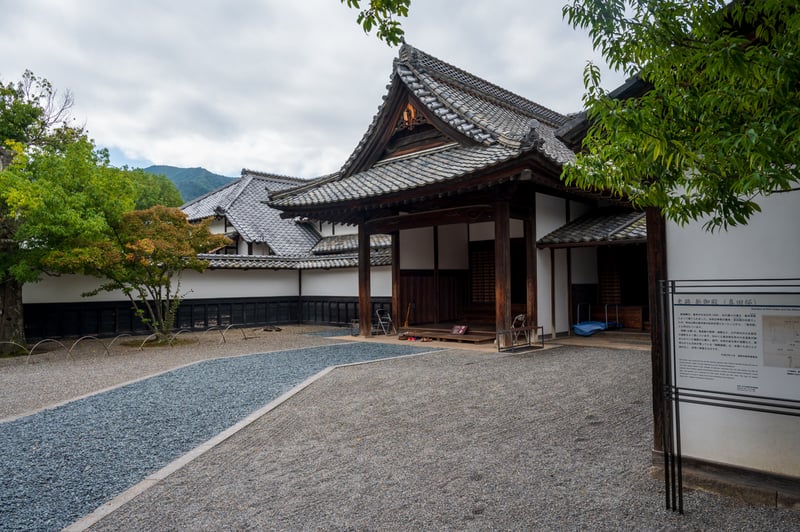
Inside the courtyard of the Former Sanada Family Residence
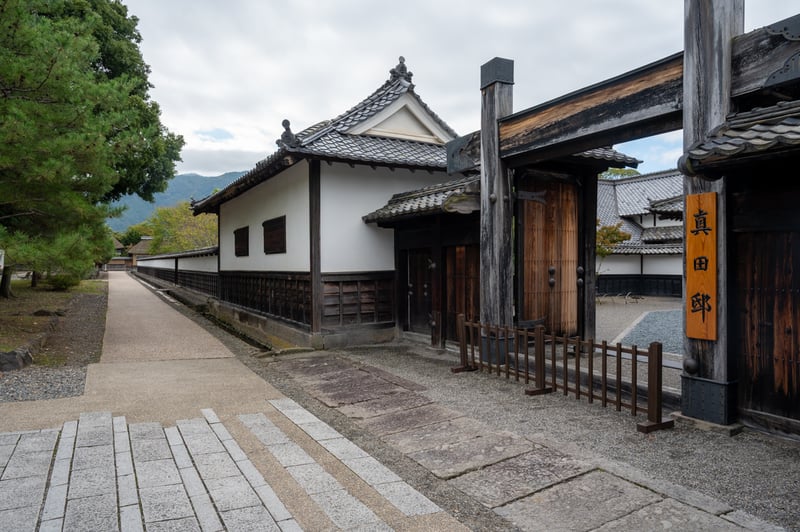
The entrance to the Former Sanada Family Residence
The Former Sanada Family Residence was built in 1864 by Yukinori Sanada, the ninth daimyo of the Matsushiro domain, for his mother-in-law and was later used as his retirement home. Decorated with traditional sliding doors and colorful motifs, the residence features a staggering 53 individual rooms and a Japanese garden. Sit back and enjoy views of ponds, well-manicured trees and seasonal flowers from the engawa patio.
Jozan Yamadera’s Historic Residence
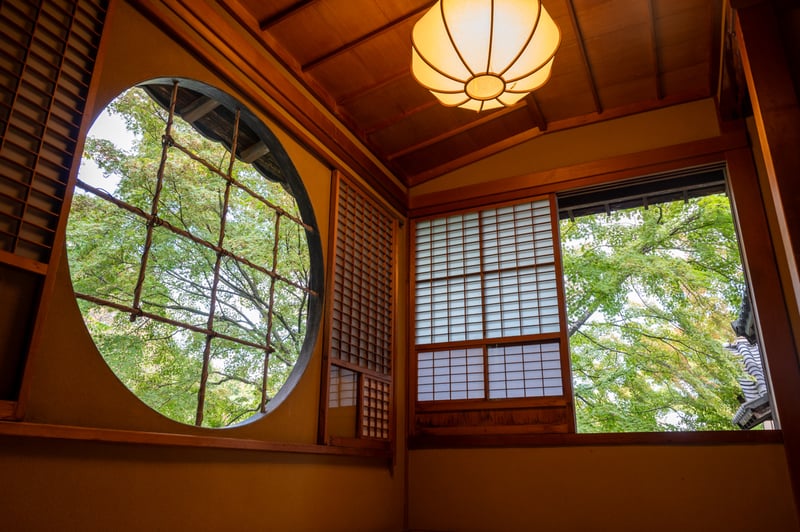
The scenery from the tearoom's circular window changes beautifully throughout the seasons
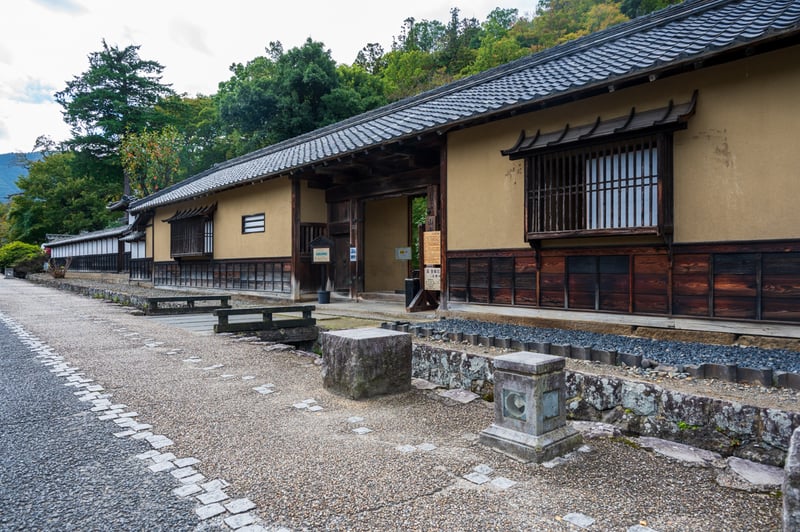
The entrance to Jozan Yamadera's Historic Residence (make sure to say hello to the koi that swim in the drain in front of it)
Make sure to also check out the Jozan Yamadera’s Historic Residence, home of a mid-ranking samurai who served the eight daimyo of Matsushiro. A smaller and less extravagant residence, the highlight is the view from the tearoom’s circular window. In autumn, the maple trees turn a fiery red, making it particularly beautiful
The Rokumon Crest
Wandering through Matsushiro’s well-preserved streets, adorned with white-plastered walls and small waterways that trickle alongside the road, you might notice a reoccurring symbol. This is the Sanada clan’s family crest, known as rokumon. It is made of six individual coins stacked in two rows of three.
Historically, Japanese people believed that a large river stretches between our world and the heavens – to cross the river, one must pay six coins to a boatman. The six coins used by the Sanada family were often included on samurai armor and represented the willingness to face death in battle. Perhaps this offers insight into the mindset that kept the Sanada family in rule up into the abolishment of the feudal system during the Meiji Restoration in 1868.
See Relics of Matsushiro’s Past at Sanada Treasure Hall
Conveniently located next to the Matsushiro Tourist Information Center, the Sanada Treasure Hall displays over 50,000 artifacts belonging to the Sanada family from paintings, calligraphy works, and ceramic, to swords and suits of armor. Although the accompanying texts are entirely in Japanese, the sheer number of pristine items make it a worth while visit.
Practice Kendo at the Former Matsushiro Literary and Military Academy
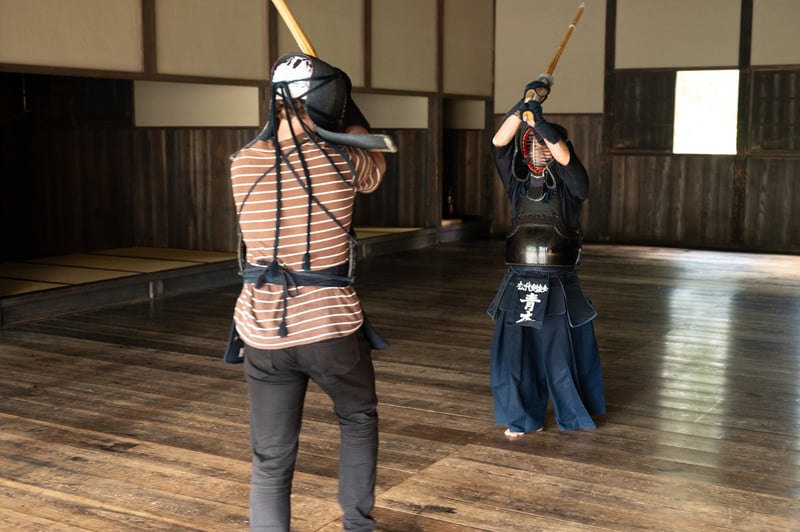
Practicing kendo at the Former Matsushiro Literary and Military Academy
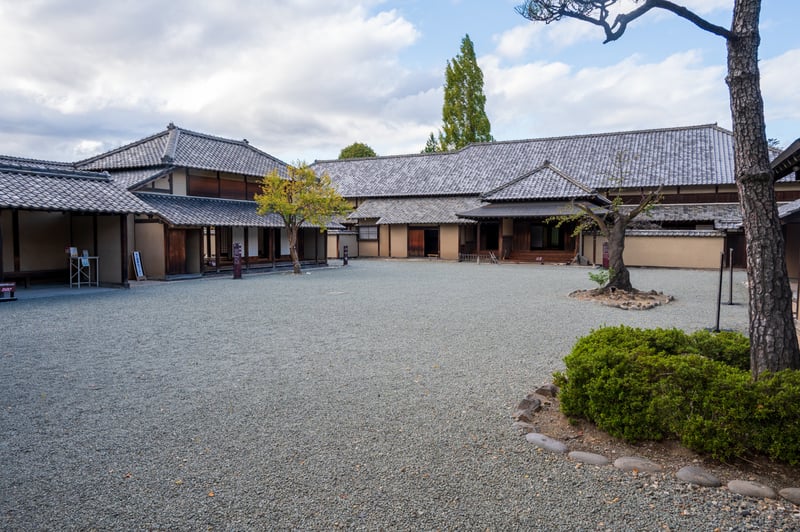
The courtyard
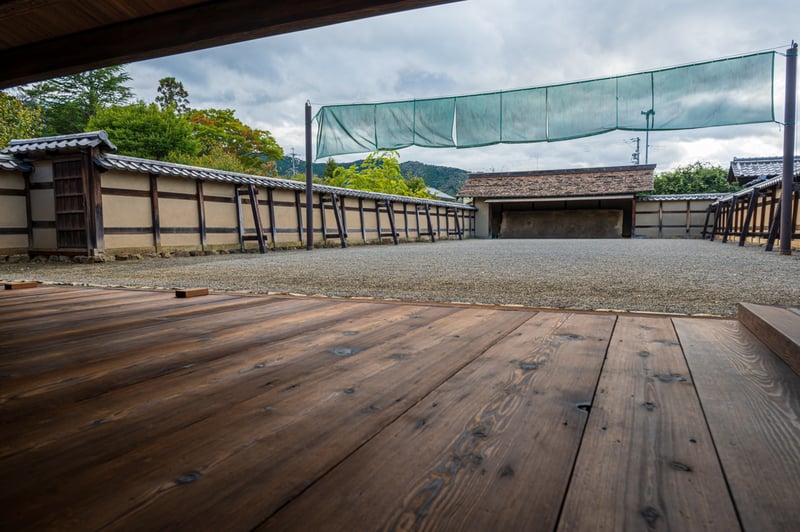
An archery range for kyudo
The Former Matsushiro Literary and Military Academy started construction under the eighth daimyo, Yukitsura Sanada, and was completed under the ninth. The school heavily focused on and adopted Dutch studies and Western gunnery, along with medicine, martial arts and traditional literature. After the abolishment of the feudal domain system in 1871, the military academy was used by the prefectural government to educate local children.
Now a historic site, the academy consists of a series of nine buildings and several martial art dojos that feel like a time capsule of the Edo Period. Here you can try Japanese martial arts such as kendo, put on handcrafted replica samurai armor or fire replica weaponry and cannons at the virtual shooting range.
Entry fee: General 400 yen, Elementary and Junior High School Students, 100 yen *Free for Elementary and Junior High School students on Saturdays.
Take a Dip in one of Matsushiro's Hot Springs
Nagano is famous for its abundance of high-quality natural hot springs and Matsushiro is no exception. There are several hot spring sources around Matsushiro, some within town, such as the iron-rich waters of Matsushiro and Kagai Onsen, and others further afield, like the weakly alkaline spring of Omuro Onsen.
For a nostalgic atmosphere, Kagai Onsen offers a cozy, retro Showa-period feel. If you prefer a quieter soak surrounded by nature, Kotori no Yu features outdoor baths overlooking expertly maintained Japanese gardens and is accessible by car. Those looking for a simple, traditional experience in the heart of town, Matsushiro So remains a popular choice for day visitors.
Kawanakajima Old Battlefield

A statue depicting a fierce battle between the daimyo lord Takeda Shingen and Uesugi Kenshin
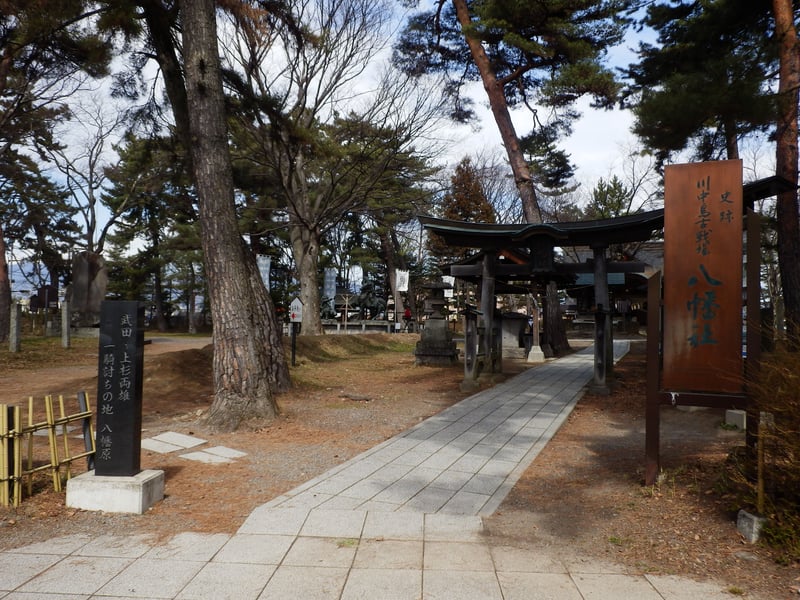
Inside the park
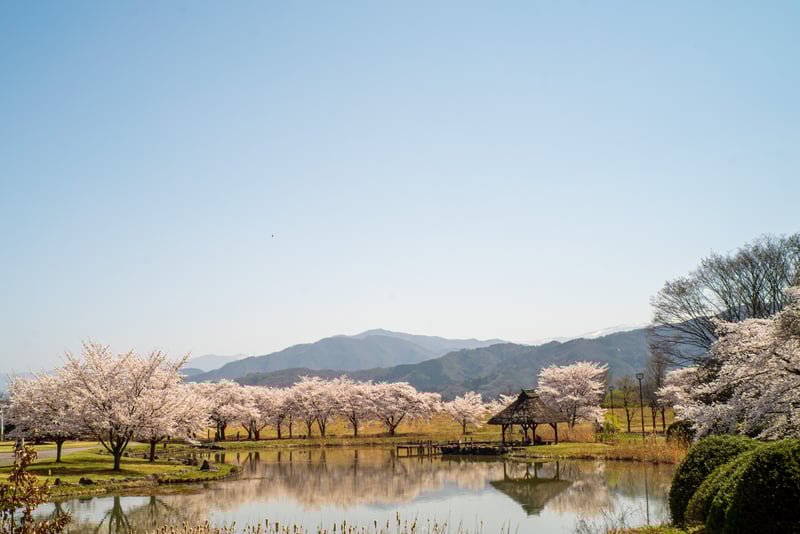
Cherry blossoms blooming around the park
One of Japan’s most famous battlefields, this is where Takeda Shingen, the daimyo who ordered Matsushiro Castle to be built, and Uesugi Kenshin clashed five times between 1553 and 1564. Today, the battlefield is a peaceful park commemorating the struggles and is home to a shrine with a statue of the two daimyo tangled in battle.
In spring, over 100 cherry blossoms bloom around the park—perfect for an afternoon picnic.
Nearby Sightseeing
Zenkoji Temple
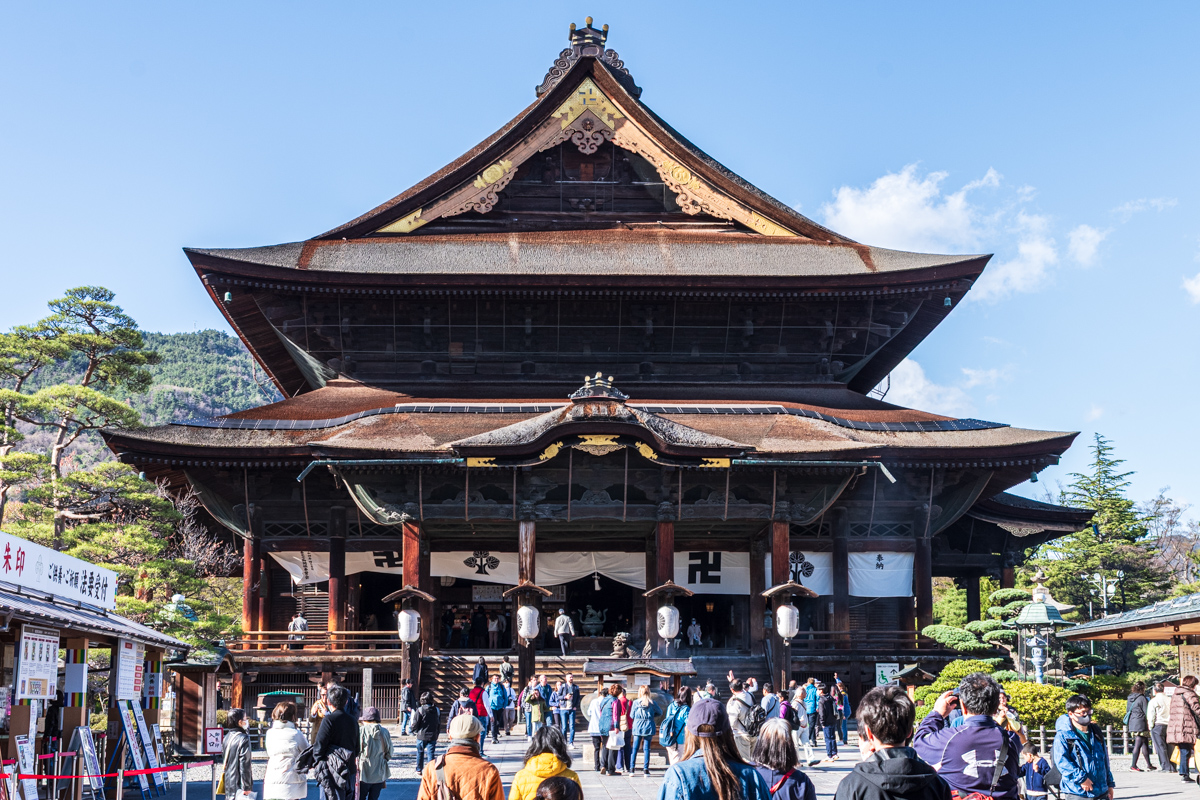
North of Matsushiro in Nagano City, Zenkoji Temple has long been a major pilgrimage site for over 1,400 years. It is said to house Japan’s first Buddhist statue, brought to the country in the 6th century. Although the statue isn’t visible to the public, you can participate in the kaidan-meguri, descending into darkness beneath the main hall to pass under the statue and receive a blessing.
Access: From JR Nagano Station, walk 20 minutes or catch a local bus departing from the Zenkoji Exit.
Togakushi
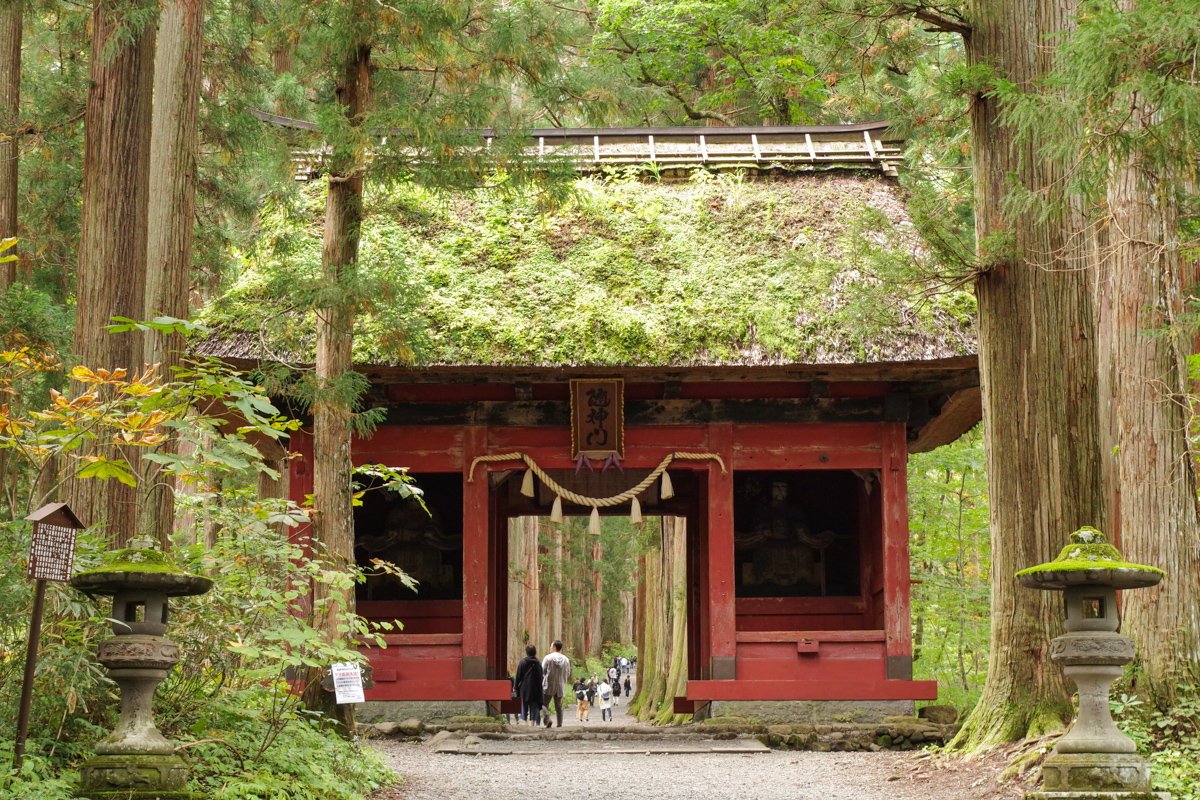
A series of five shrines deeply rooted in Japanese mythology. Located up in the mountains north of Nagano City, the shrines lie in the forest of Togakushi. The most famous is the path of 400-year-old cedar trees leading up to the Okusha Shrine. Togakushi is also famous for its handmade Togakushi soba noodles.
Access: One hour by car from the Nagano-Joetsu IC Exit or 70 minutes by bus on the Togakushi line departing from Nagano Station.
Obuse Town
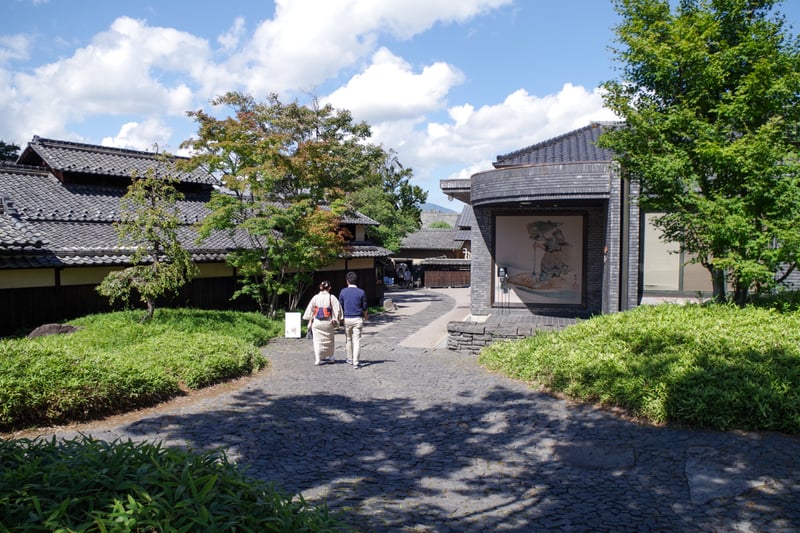
Walking through central Obuse
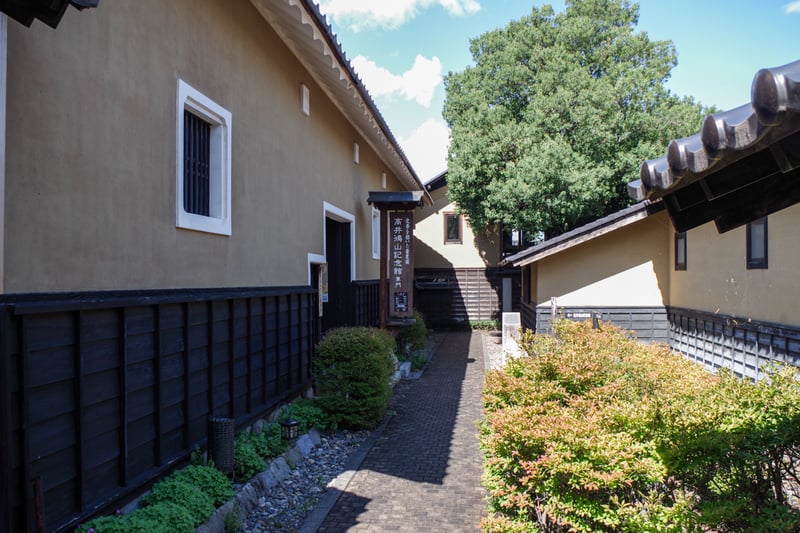
Obuse's narrow chestnut path behind merchant houses and sake breweries
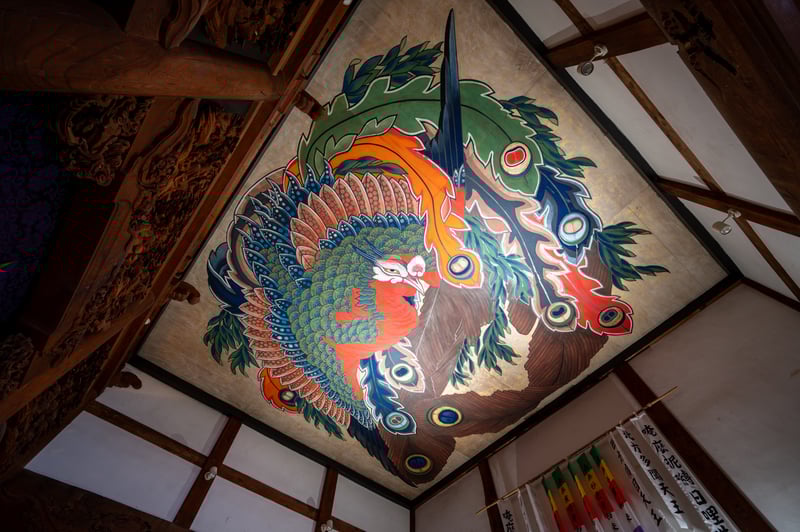
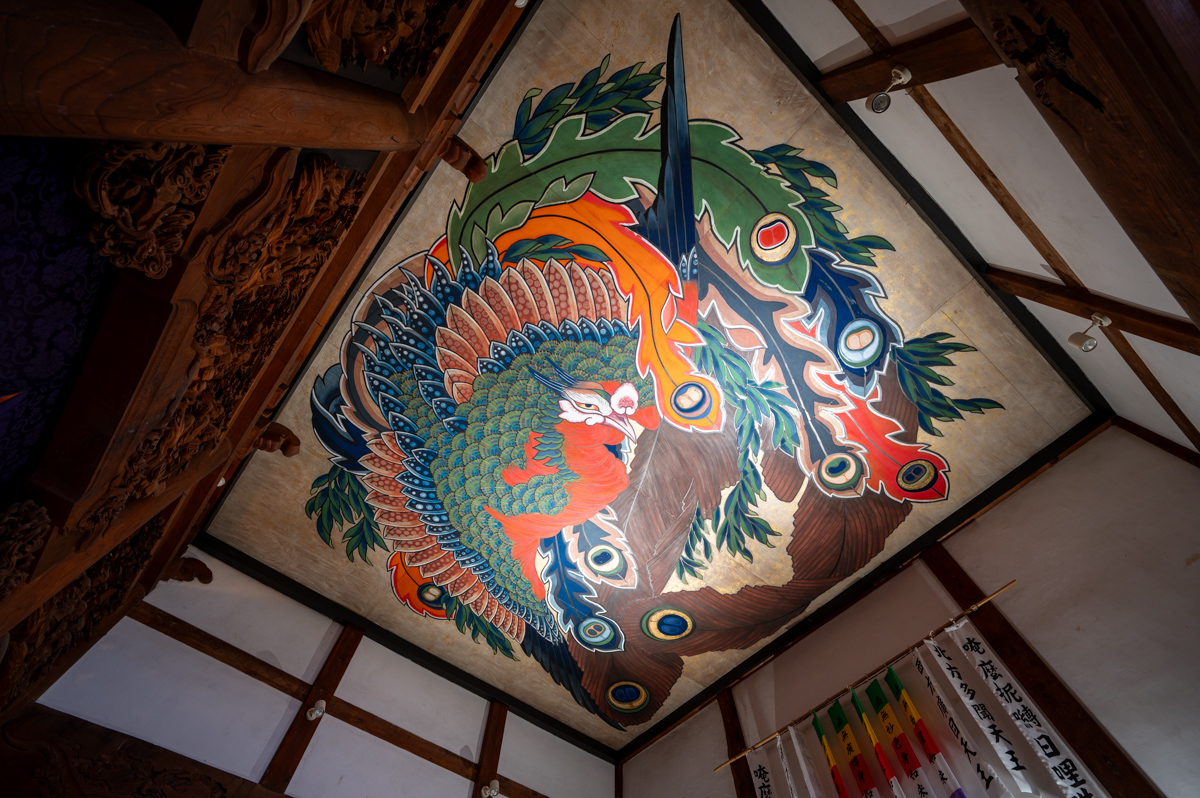
Katsushika Hokusai's painting of a phoenix at Gansho-in Temple
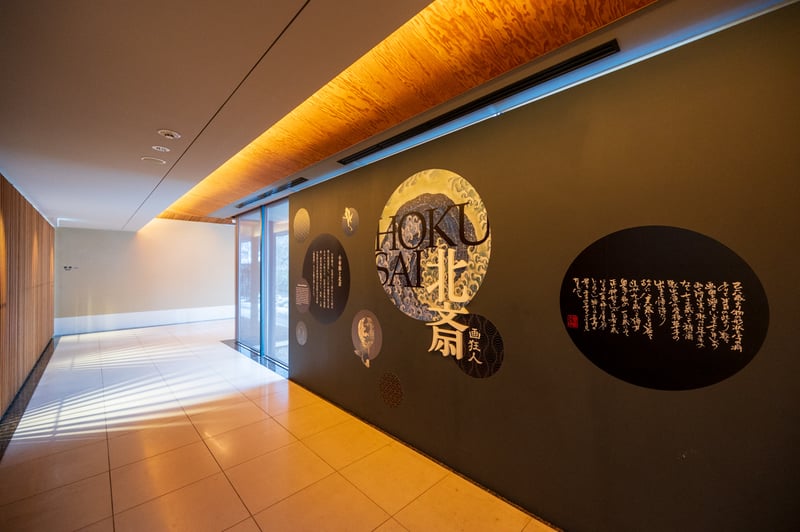
Inside Hokusai-kan Museum
A charming town located along the Chikuma River known for its chestnuts, cafes and art museums.
The famous ukiyo-e artist Katsushika Hokusai, who created The Great Wave off Kanagawa, temporarily stayed here during his later years, and you can see exhibitions of his many works at the Hokusai-kan Museum or his large ceiling painting of a phoenix at nearby Gansho-in Temple.
Afterward, relax in one of Obuse’s cafes with a coffee and a chestnut-flavored dessert.
Where to Stay
There are several accommodations in Matsushiro, from budget friendly guesthouses to large hotels. Below are few worthwhile to stay the night at before continuing on your journey.
Matsushiro Walkers Guesthouse
A guesthouse that won’t break the bank, offering mixed and ladies-only dormitories as well as private twin rooms.
Mercure Nagano Matsushiro Resort & Spa
A modern hotel located near the Nagano IC Exit is equipped with indoor and open-air baths that draw hot spring water from local Matsushiro Onsen.
Matsushiro Guesthouse Hotei-Ya
A renovated traditional house, complete with sliding doors, tatami rooms and modern amenities, located centrally in Matsushiro, close to both its historical sites and the local Family Mart.
Nagano City
Or you can stay in Nagano City which has a wide-range of accommodations near JR Nagano Station.