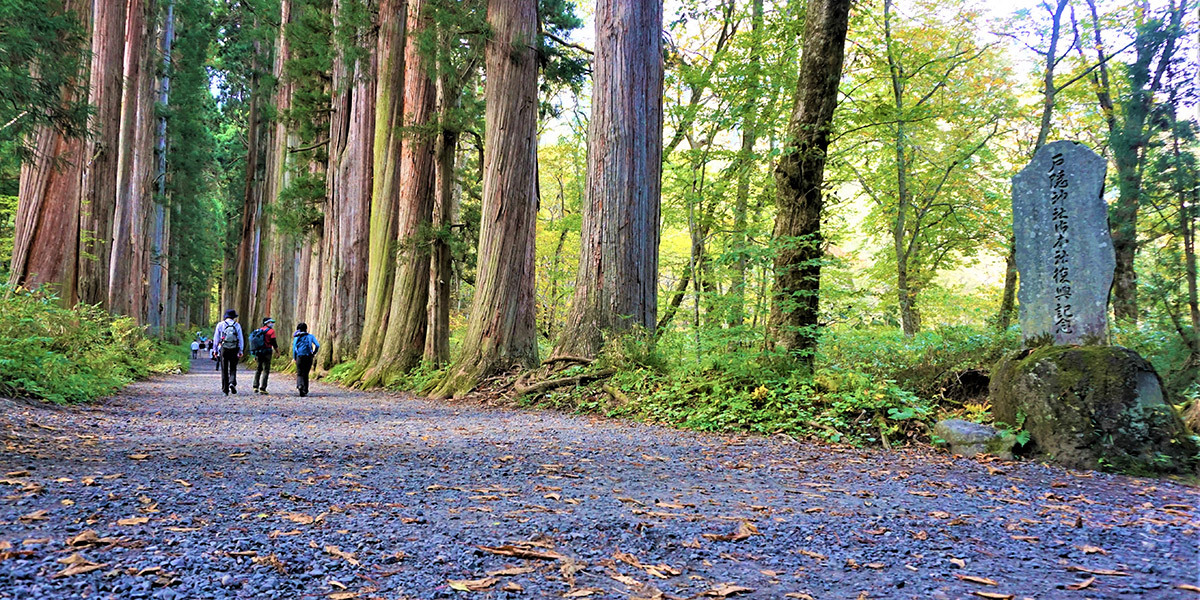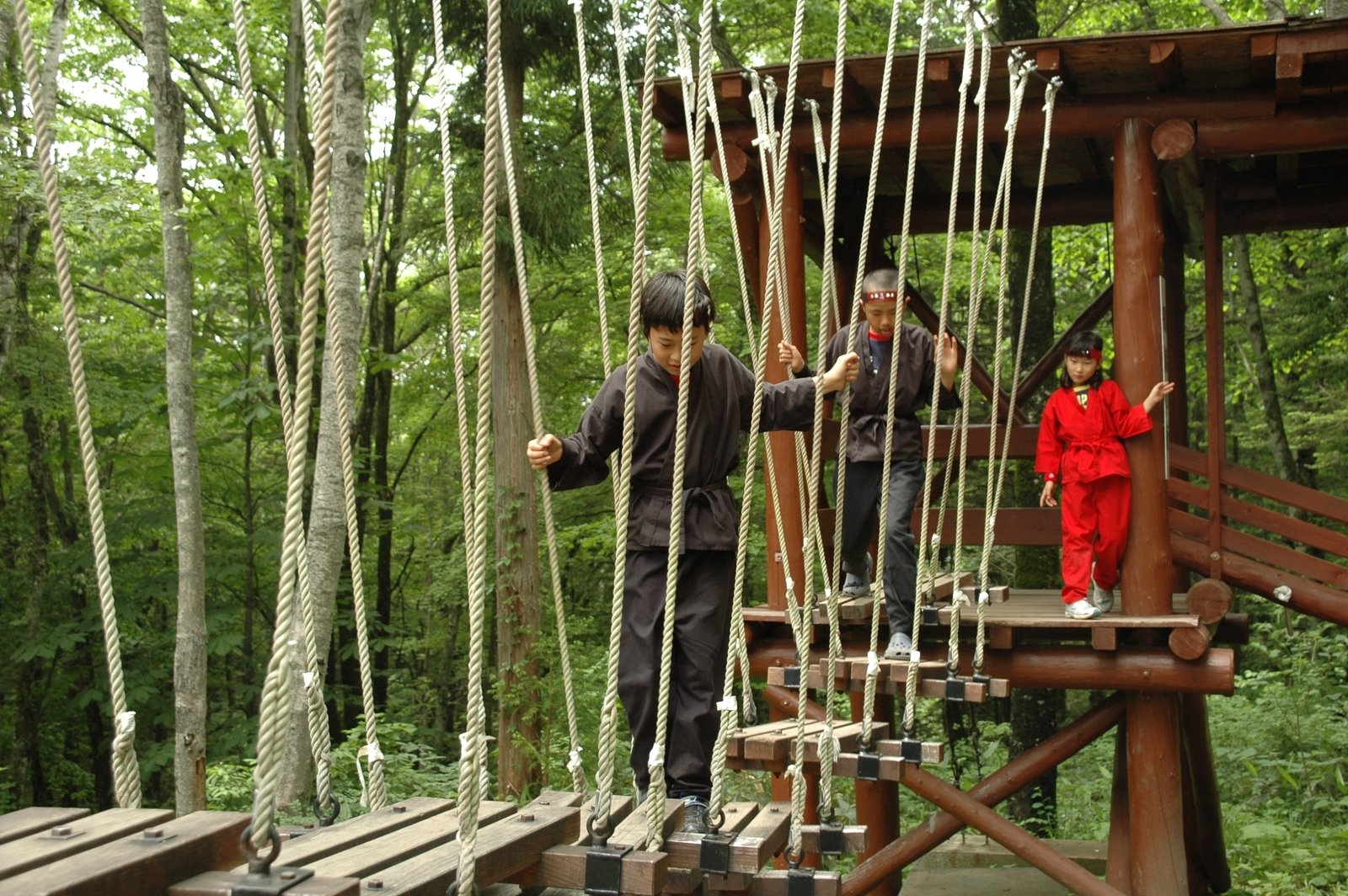


At the foot of Mt. Togakushi to the north of Nagano City, the lush forests of Togakushi are home to ancient shrines and picturesque scenery. Within its natural splendor lies a series of shrines connected by forest trails, with a breathtaking walk between 400-year-old cedar trees leading up to its final shrine.
Togakushi Travel Guide
Introduction
The history of Togakushi is deeply rooted in Shinto mythology. According to legend, after the sun goddess Amaterasu had a fight with her younger brother, she hid herself in a cave and sealed the entrance with a massive rock. As a result, the world was plunged into pure darkness. All the other gods gathered together to form a plan to lure her out. The god of wisdom proposed holding a festival. The dancing, frolicking and commotion got the attention of Amaterasu, and when she moved the boulder aside to take a peek, the god of strength picked up the rock and hurled it into the air—restoring light to the world.
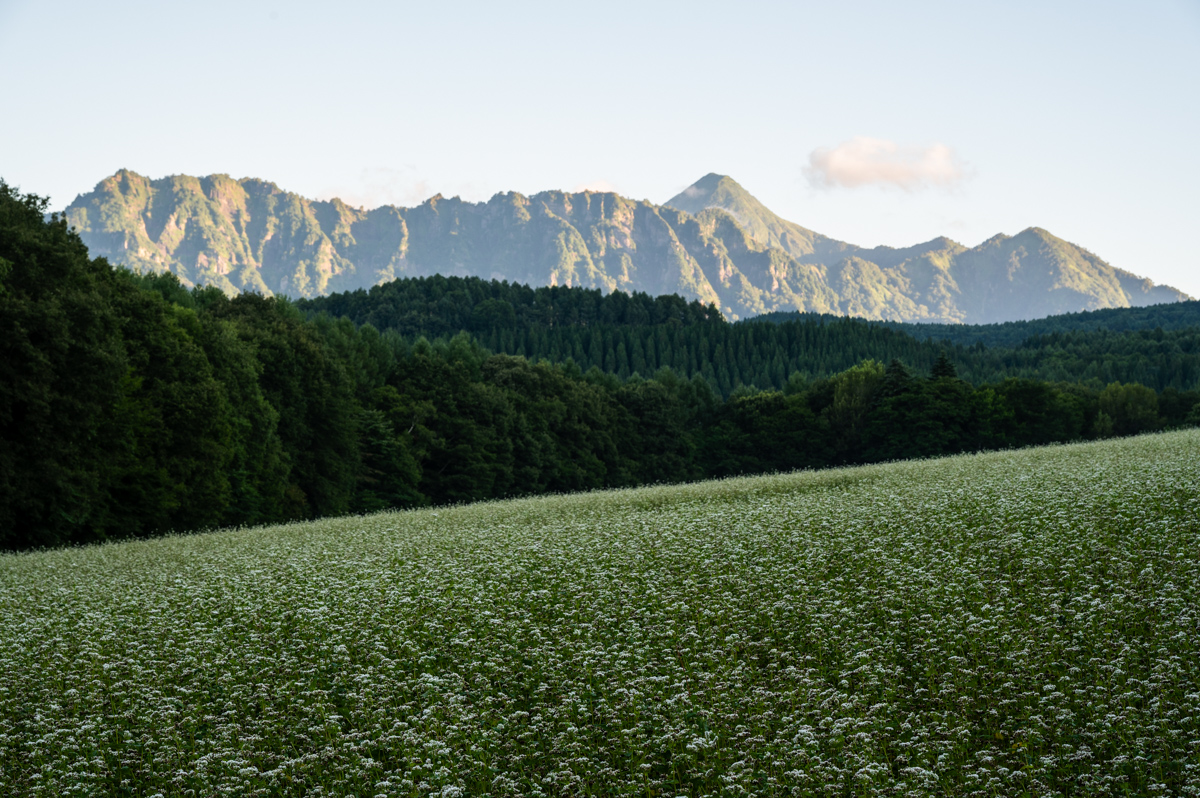
The door was said to have fallen back down to Earth and landed in Nagano, becoming the precipitous mountain peaks of Togakushi. Fittingly, the name Togakushi comes from the characters 戸 (door) and 隠 (hidden), meaning “hidden door.”
Location and Access
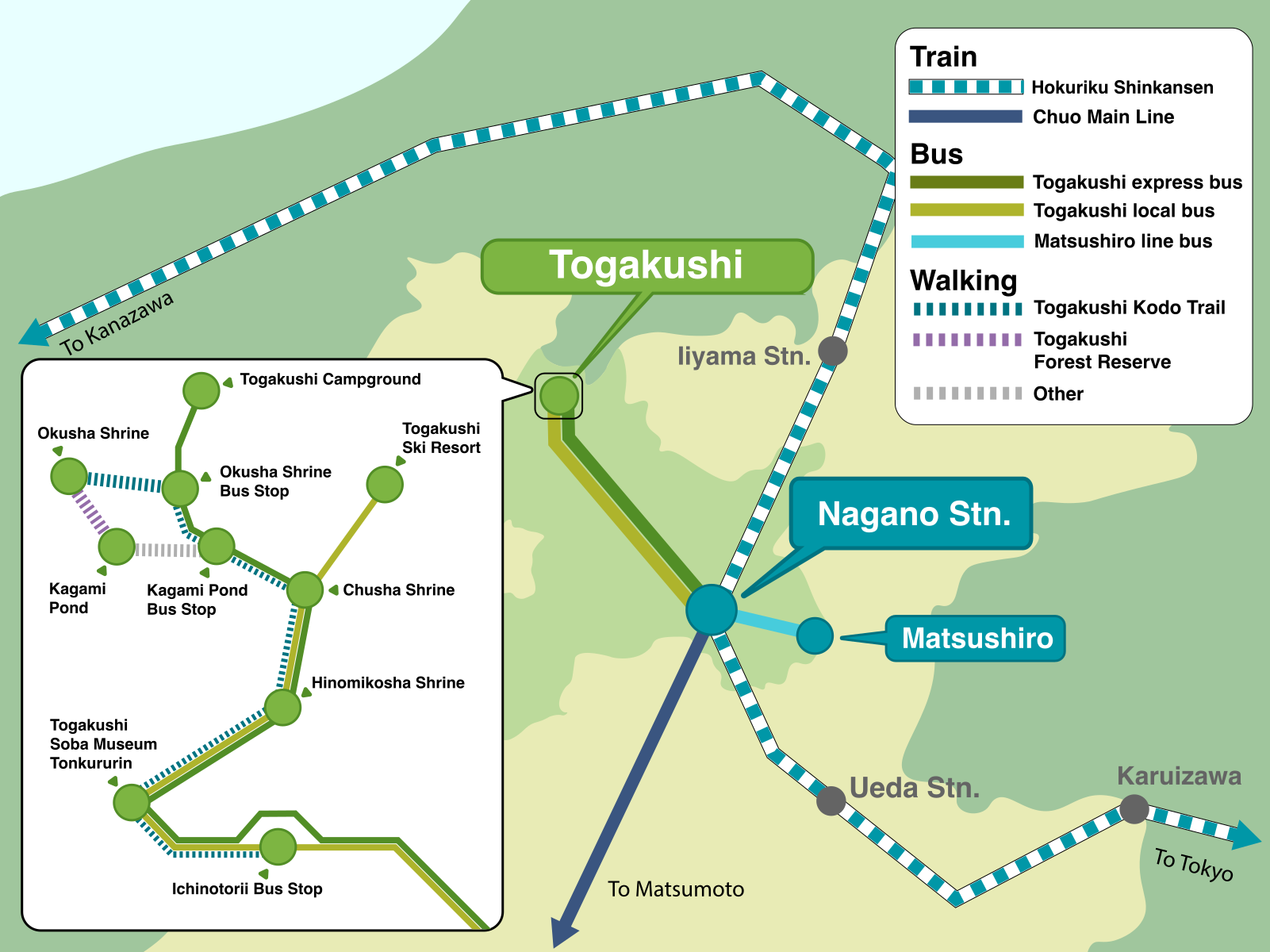
Togakushi sits high in the mountains above Nagano City and can be reached in around 45 to 75 minutes depending on mode of transport.
By Bus
Direct buses bound for Togakushi depart from Nagano Station. From the Zenkoji Exit, cross the road towards the Don Quijote side and board the bus in front of the Alpico Bus Ticket Office at Bus Stop No. 7.
By Car
The quickest and easiest way to visit Togakushi is by car. There are several car parks located near the shrines, with Okusha Shrine’s car park leading directly to the trailhead to Okusha Shrine and the rows of cedars. Paid parking is available at Okushairiguchi Parking Lot and is closest to the Okusha trail head. Other free and paid parking options are near the Chusha Shrine.
When to Visit
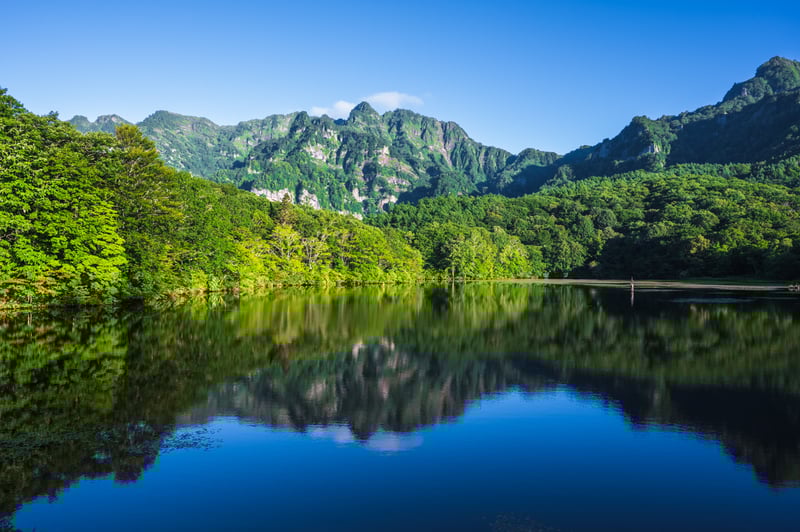
Kagami Pond in summer
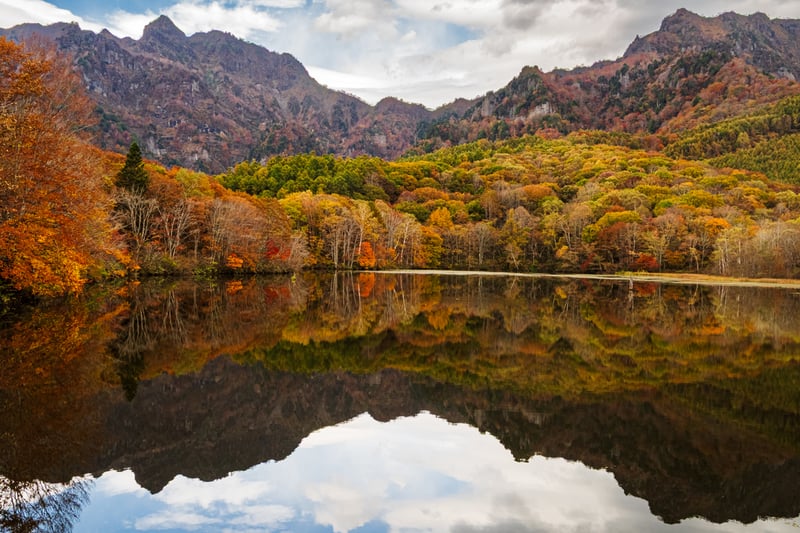
Fall foliage reflecting beautifully in Kagami Pond's water
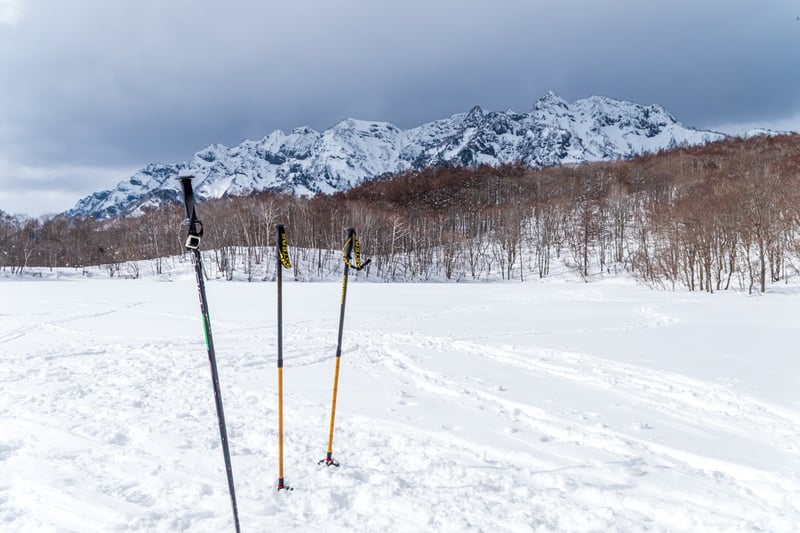
Trekking to Kagami Pond in winter with a Mt. Togakushi in the background
Togakushi can be visited year-round but is especially popular during the summer months due to its cool climate and lush greenery. In autumn from to mid- to late October, the forests turn majestic shades of gold and orange, creating a dazzling spectacle around Kagami Pond and Togakushi’s many shrines.
Winter in Togakushi
From late November to early April, many of Togakushi’s establishments close for winter. However, the heavy carpets of snow transform Togakushi into a winter wonderland, waiting to explored on snowshoes or cross-country skis.
Up until December of 2025, buses did not stop at the Togakushi Okusha bus stop during winter. The local Togakushi line still does not stop at Okusha, but the express bus does.
Regarding what to wear, warm winter clothes and waterproof boots with good grip are essential. Snow usually remains into mid- to late March.
Things to do in Togakushi
Walk the Five Shrines along the Togakushi Kodo Trail
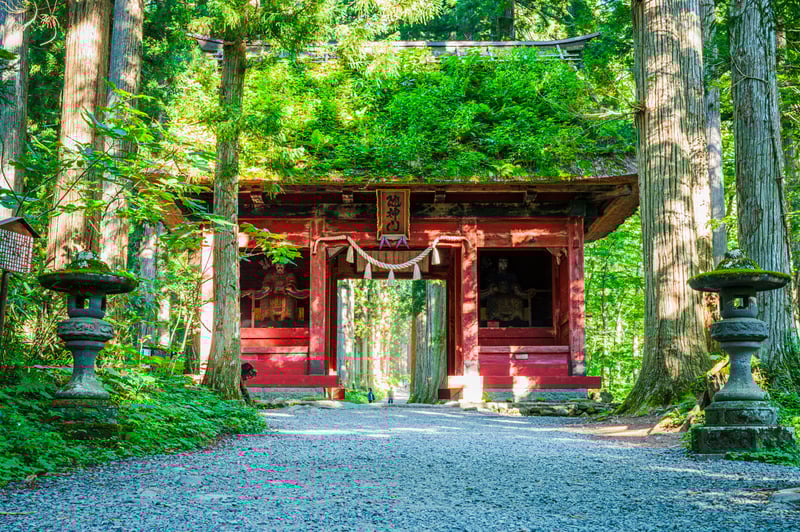
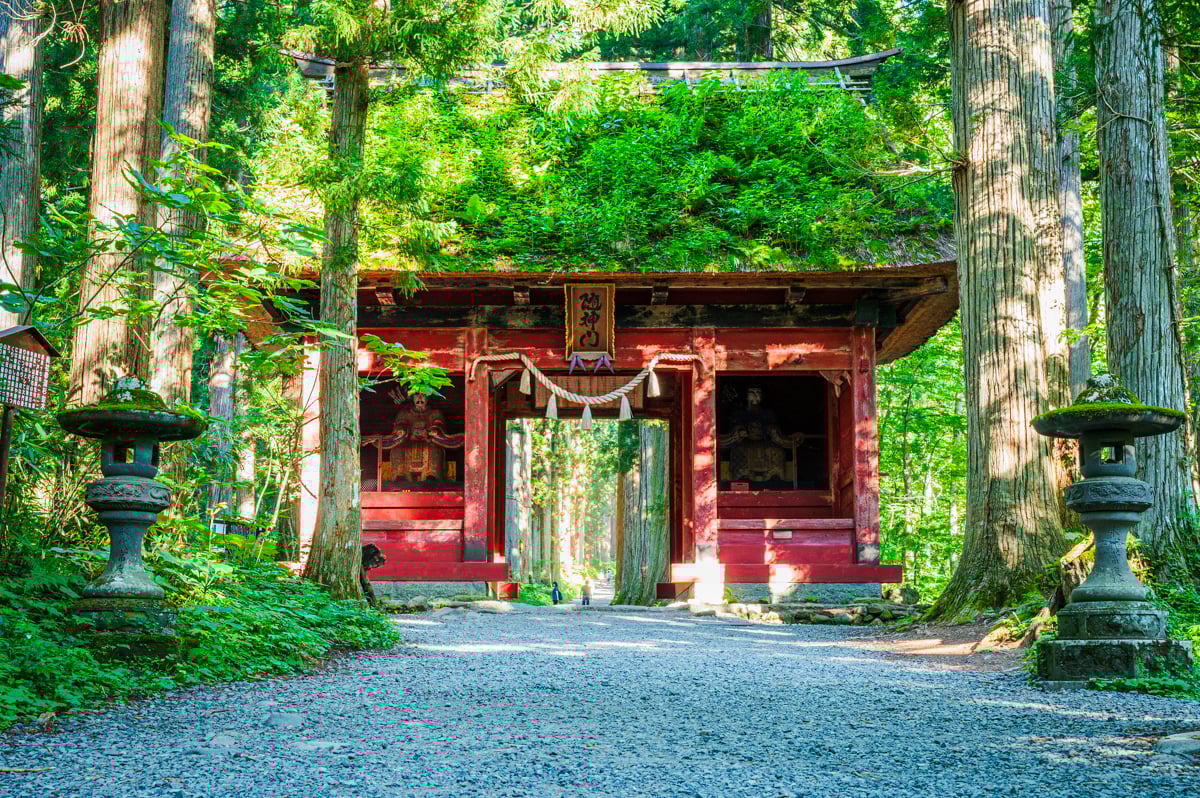
Zuijinmon Gate in front of the approach to Togakushi's famous cedar tree lane

Hokosha Shrine
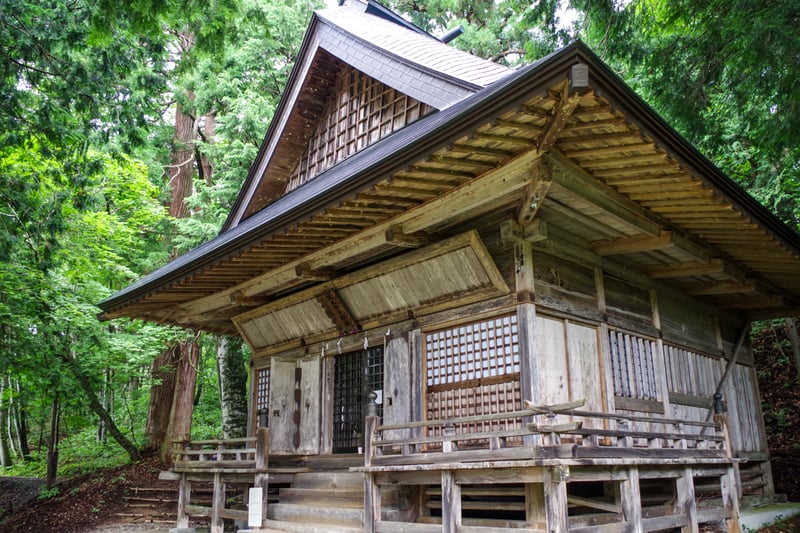
Hinomikosha Shrine
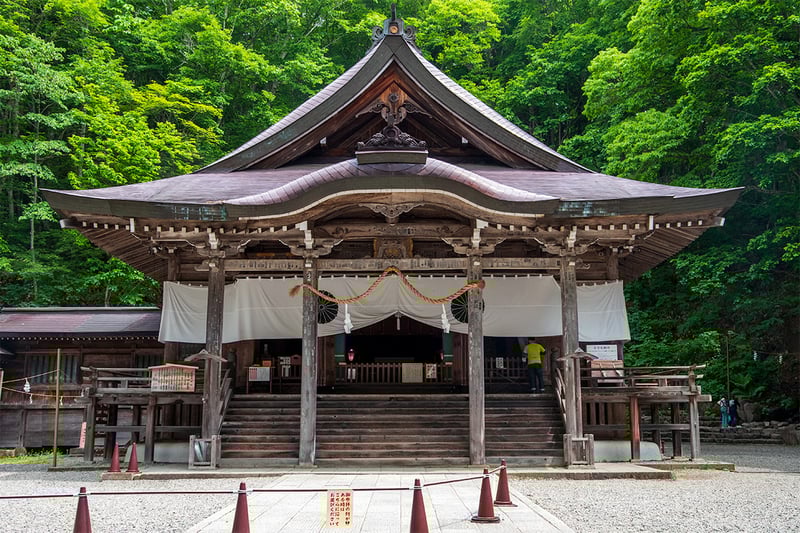
Chusha Shrine
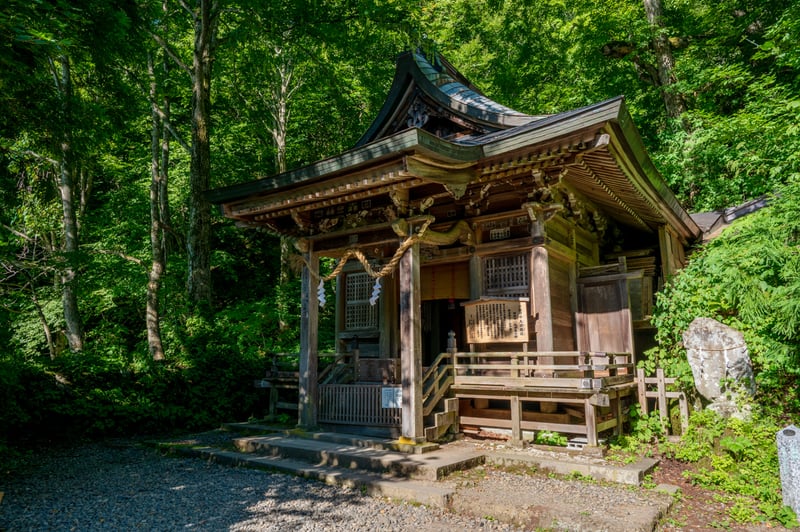
Kuzuryusha Shrine
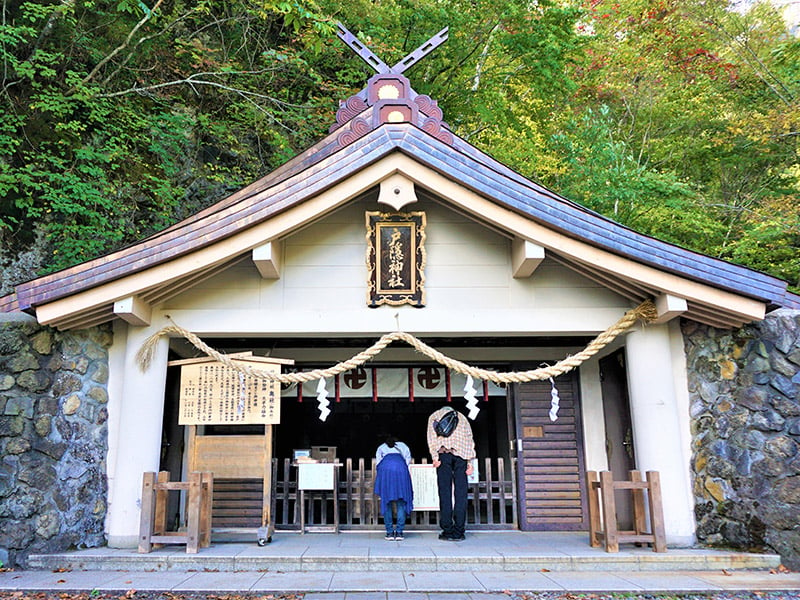
Okusha Shrine
Togakushi is home to five major shrines: the Hokosha, Hinomikosha, Chusha, Kuzuryusha and Okusha shrine. Each enshrines a deity connected to the Shinto legend of the sun goddess, Amaterasu. The Togakushi Kodo Trail connects each of these shrines, winding through sections of lush forest and passing weathered statues and moss-covered monuments along the way. Occasionally, the trees give way to views of Mt. Togakushi in the distance and idyllic hamlets surrounded by fields of buckwheat. On the final stretch to the Okusha Shrine, you are greeted by the striking Zuijinmon Gate and just beyond, towering rows of 400-year-old cedar trees.
Walking the full route covers approximately 14.5 kilometers and takes 6 to 7 hours (time for lunch included). There are bus stops for each shrine, so if you are short on time, you can start at the Hokosha Shrine or the Chusha Shrine and walk to the Okusha Shrine from there.
Visit Kagami Pond that Reflects Mt. Togakushi in its Water
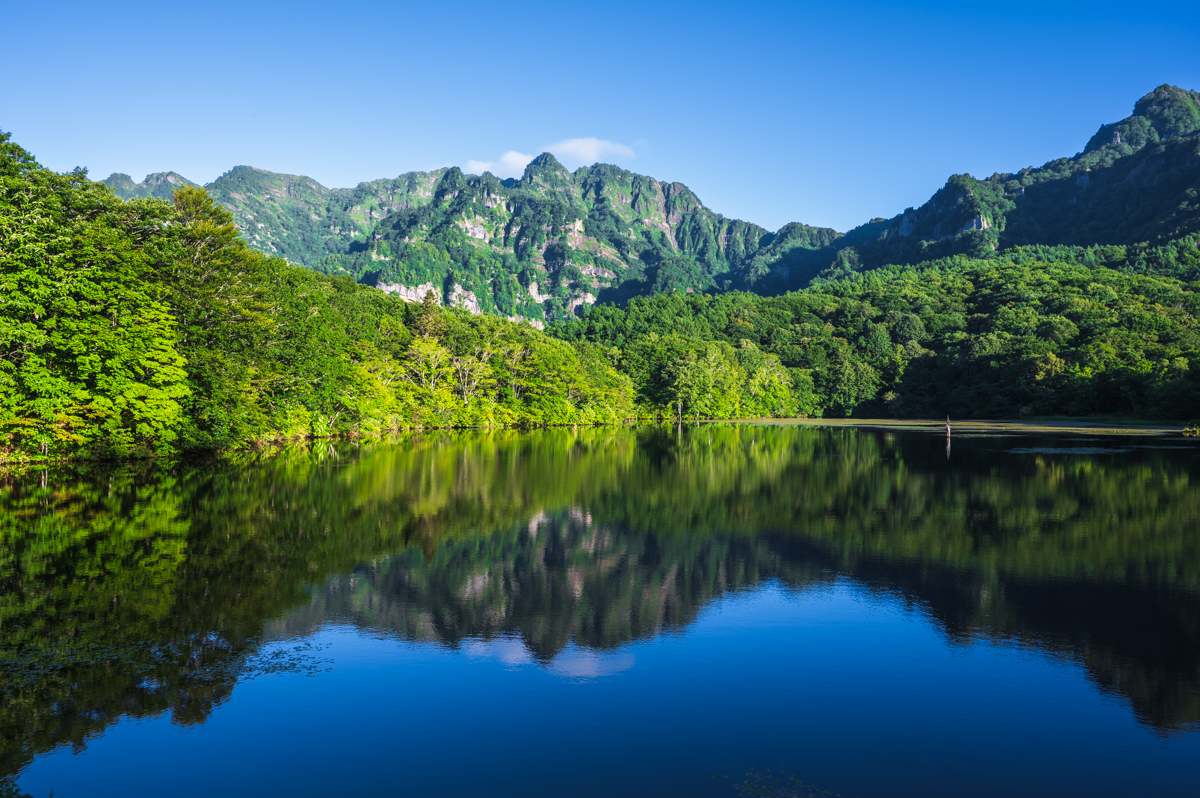
Kagami Pond is a picturesque body of water at the base of Mt. Togakushi, about 1.6 km from the Zuijinmon Gate of the Okusha Shrine through the Togakushi forest botanical garden (about 45 min. on foot).
On clear days, the rugged ridges of Mt. Togakushi are reflected on the still surface of the water. Nearby, you can stop and take a break at the charming log-built Donguri House, known for its gratins, tarts and desserts made with fresh local Nagano fruit.
In winter, the pond freezes over and becomes blanketed in deep snow. While the trail is completely obscured by the snow, the pond is still accessible via one of Togakushi’s marked snowshoeing courses (more below).
Snowshoeing in Togakushi
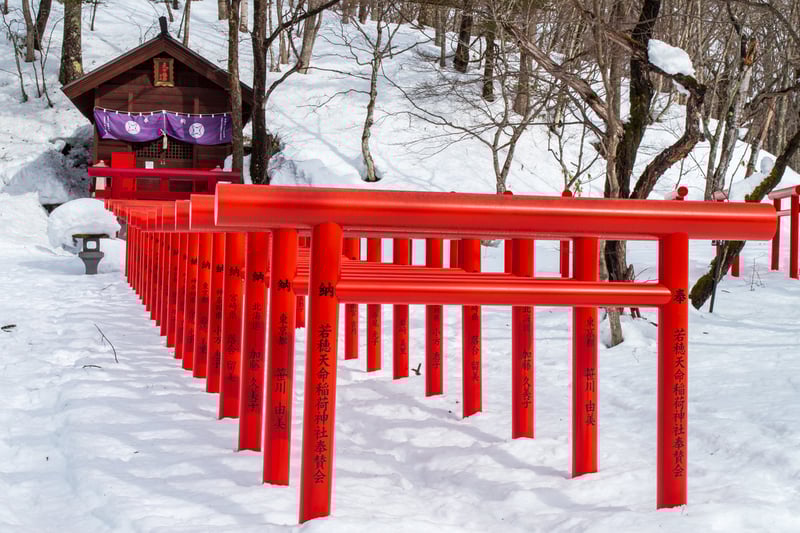
Torii gates buried in heavy snow
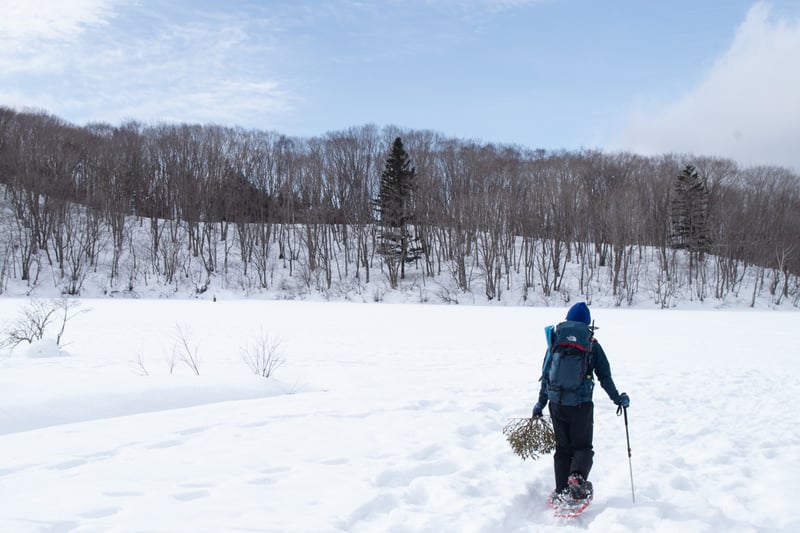
The freedom of snowshoeing
Mt. Togakushi in the background
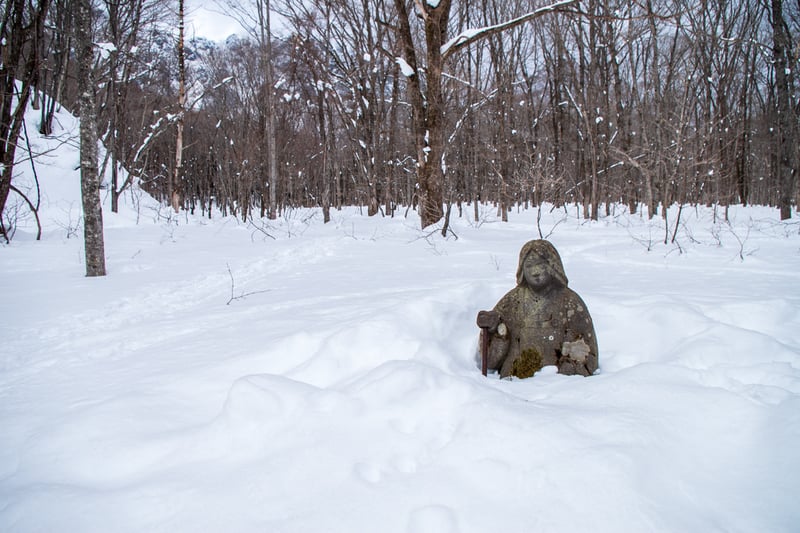
A statue buried in heavy snow
The forests of Togakushi are perfect place for a snowshoeing stroll during winter. As long as you know where you’re headed, you can freely move around the snow unimpeded by bushes or small streams. There are several places that rent snowshoes during winter, including the Togakushi Tourism Association by the Chusha Shrine, the Okushamae Naosuke restaurant next to the entrance to the Okusha Shrine, as well as Togakushi Ski Resort.
There a several marked courses around Togakushi, and the most popular begins from the entrance to the Okusha Shrine. After about 20 to 30 minutes, you'll reach the Zuijinmon Gate and Togakushi’s lane of cedar for the area’s most striking views. The contrast of red against evergreen trees and pure white snow is stunning, accentuated by the height of these 400-year-old giants.
From the Zuijinmon Gate, follow the colored flags wrapped around the trees as you snowshoe through powdery snow on the way to Kagami Pond. Along the way, you may find some statues half-buried in the snow, as well as the vermillion torii gates of Tenmei Inari Shrine. From Kagami Pond, you can take in the views of the precipitous mountains of Togakushi.
*The section beyond the lane of cedars to the Okusha Shrine is closed during winter.
Hiking and Mountain Climbing in Togakushi
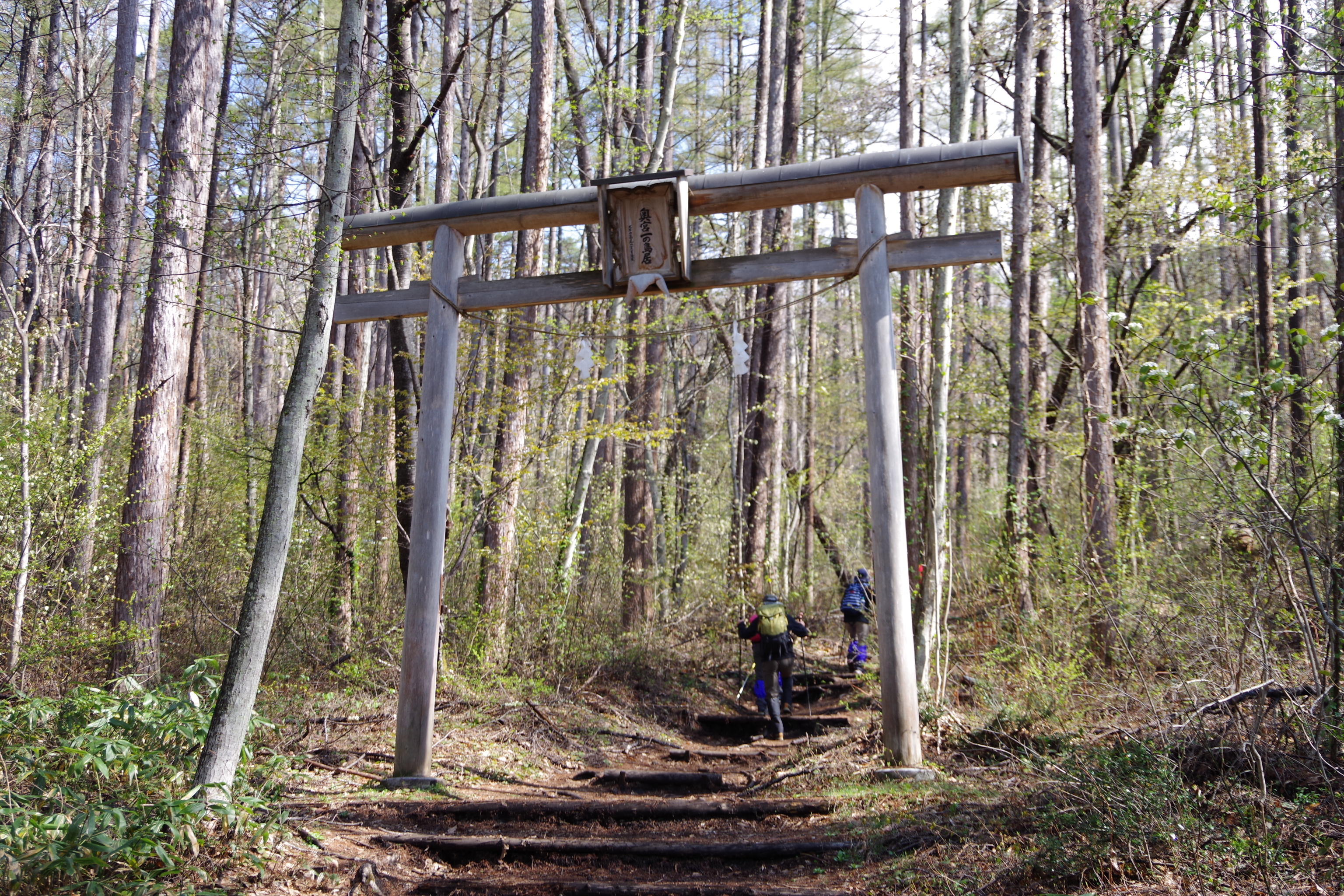
Togakushi and its surrounding area offer several day hikes accessible by bus. Just outside of Togakushi proper, Mt. Iizuna and Mt. Kurohime are both popular options for novice to intermediate hikers, while precipitous Mt. Togakushi offers a challenging climb with varied terrain for experience hikers.
At 1,917 meters, Mt. Iizuna has a variety of beginner-friendly courses and offers excellent scenery of the Togakushi mountains and the Northern Japanese Alps. The course from Ichinotorii Trailhead is easily accessible by Togakushi line bus. Take the Alpico Bus bound for Togakushi from Nagano Station and get off at the Iizuna Tozanguchi bus stop, then walk about 13 minutes to the south trailhead.
Slightly taller at 2,053 meters, Mt. Kurohime straddles the border of Togakushi and Shinano Town, overlooking Lake Nojiri. From the nearest bus stop (Togakushi Campground), walk 20 minutes along the road to the Ohashi Rindo trailhead. The full course takes about 6 hours.
Mt. Togakushi is a challenging hike reserved for skilled climbers. Sections of chains, narrow ridgelines and waterfall descents make it a thrilling but difficult experience. The Ari-no-To-Watari is the most harrowing portion, only as wide as one’s shoulders and dropping off steeply on both sides. Starting from the trailhead at the Okusha Shrine and finishing at the trailhead behind Togakushi Campgrounds, it takes about 7.5 hours from the Okusha bus stop (including the 40-minute walk to the Okusha Shrine and the return 55-minute walk from Togakushi Campground).
Before climbing mountains, be sure to prepare a mountain climbing itinerary to submit at the trailhead. Learn more here.
Make and Eat your Very Own Soba Noodles
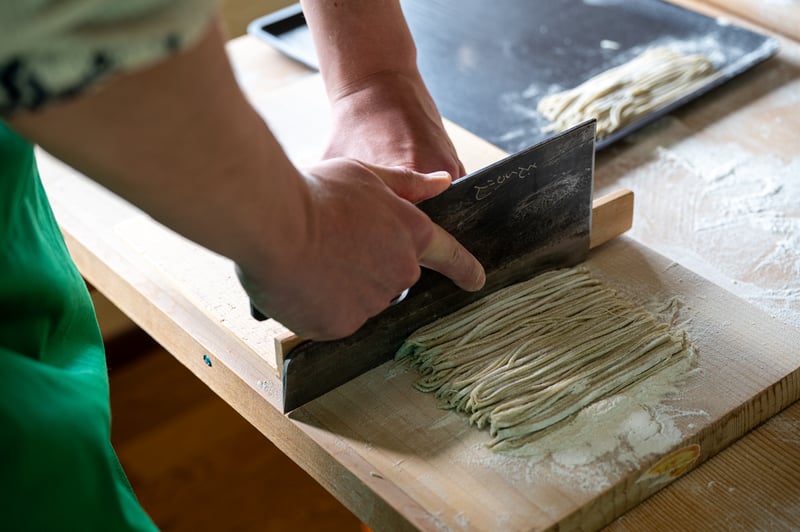
Cutting soba using a special soba knife
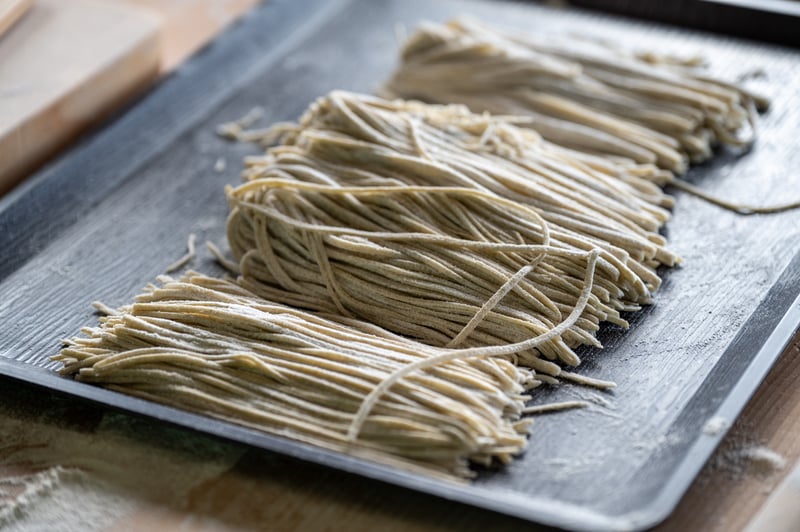
Rows of freshly cut soba noodles
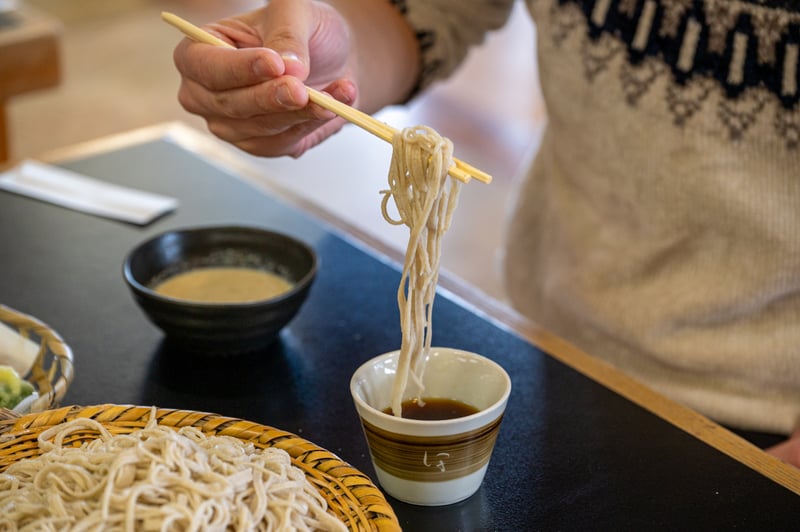
Dipping the noodles into umami-rich soba tsuyu sauce
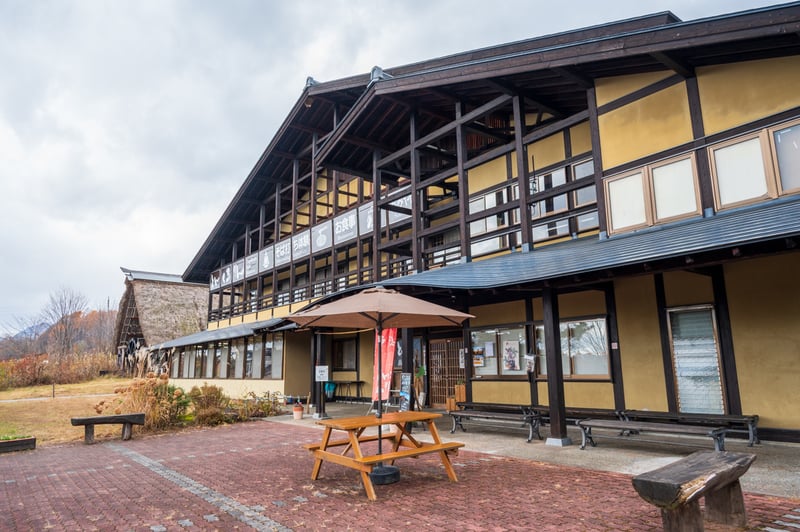
The front of Togakushi Soba Museum Tonkururin
Togakushi’s cold climate made rice farming difficult in the past, but it proved ideal for growing buckwheat. As a result, the area became famous for its soba fields and soba buckwheat noodles, shaping the local cuisine around these hearty noodles. Throughout Togakushi, you’ll find plenty of local restaurants serving zaru soba, chilled noodles served on a bamboo plate with a dipping sauce, as well as hot soba topped with fresh tempura. Soba tea is a natural complement to your meal. And if you’re not full yet, finish with soba dumplings or soba ice cream.
However, there is nothing better than eating your very own noodles. To do this, head to Togakushi Soba Museum Tonkururin, where a soba master guides you to making them from scratch. Here they lead you through each step, from mixing soba flour and water, to kneading and rolling the dough into a fine sheet before cutting it into noodles using a traditional soba knife. The slices may not be perfectly even, but that’s part of the charm. After the mini workout, the staff will cook your freshly made noodles and serve them up for you to enjoy.
Explore Togakushi’s Ninja History
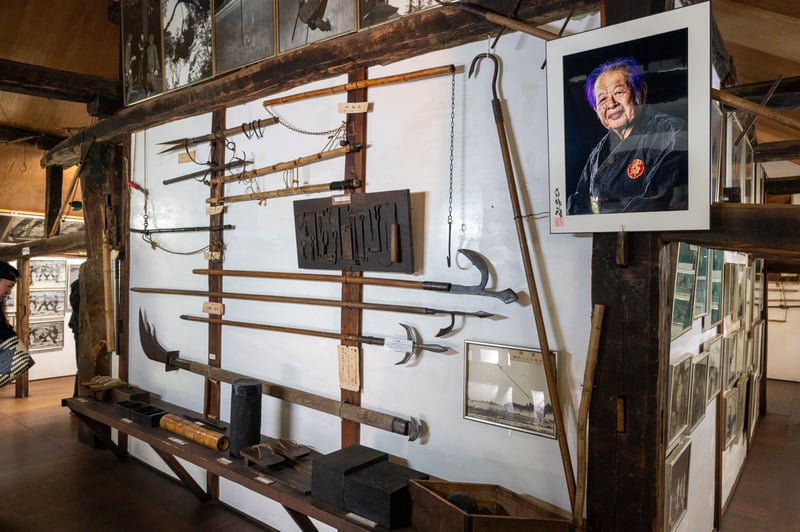
Inside Togakushi Ninja Museum
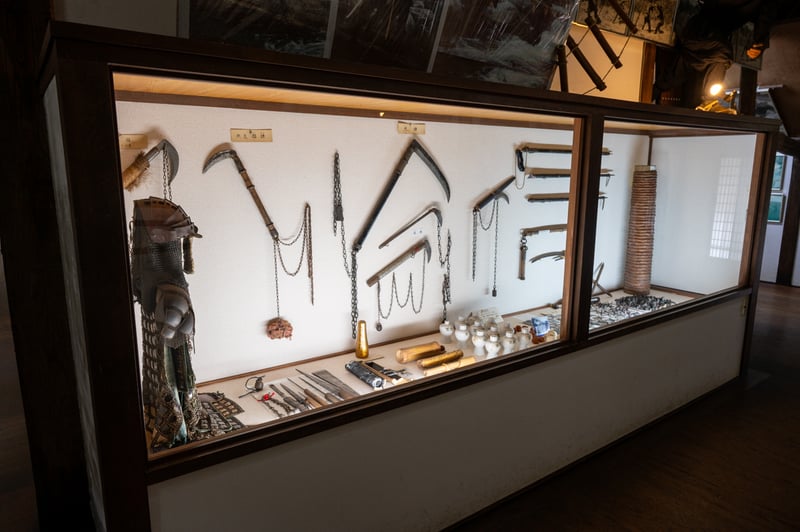
Displays of ninja tools and other paraphernalia
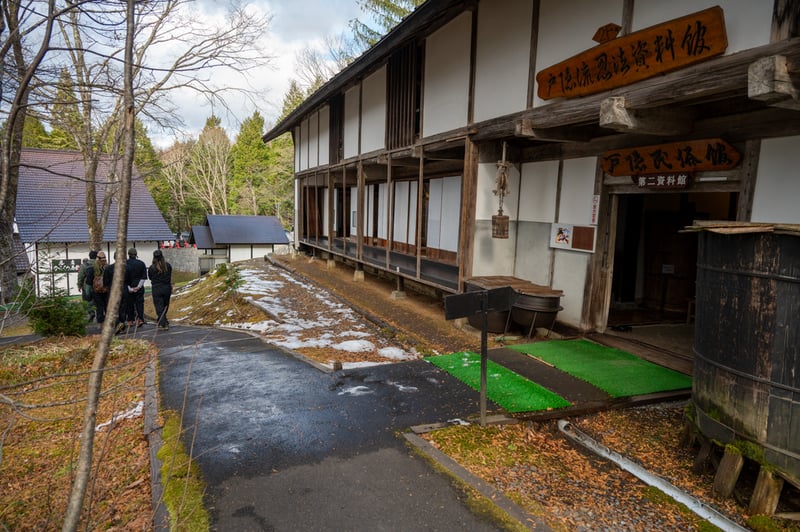
The entrance to Togakushi Ninja Museum
According to legend, the 12th century samurai warrior Daisuke Nishina combined samurai fighting styles with the mountain ascetic practices of Shugendo to form Togakure-ryu Ninjutsu, a form of ninja martial arts. The area became a haven for ninja spies, and there are several facilities around Togakushi where you can learn more about real ninja and their history. To see actual ninja tools, practice shuriken-throwing or escape from the Karakuriyashiki trick house, visit the Togakushi Ninja Museum across from the Okusha Shrine. If you’re traveling with kids, consider visiting the Chibikko Ninja Village to the right of the Togakushi Chusha Shrine. It is also possible to practice ninja martial arts as part of a private lesson. Learn more here.
Nearby Sightseeing
Obuse Town
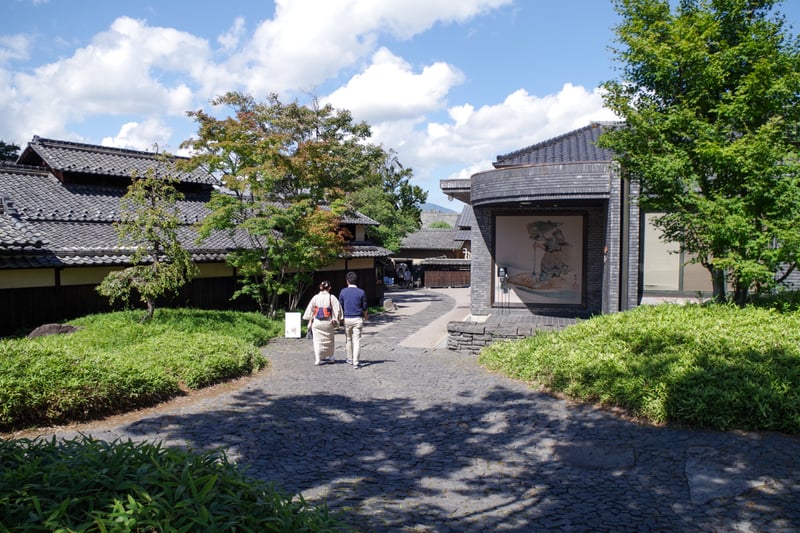
Walking through central Obuse
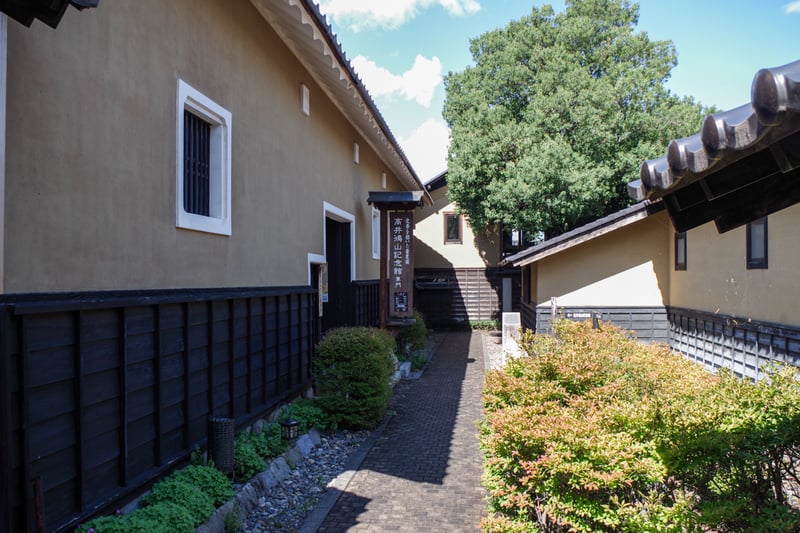
Obuse's narrow chestnut path behind merchant houses and sake breweries
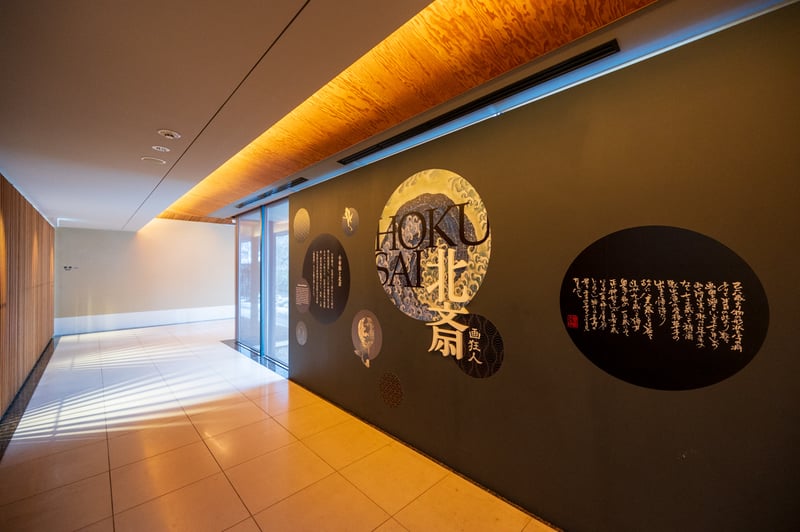
Inside Hokusai-kan Museum
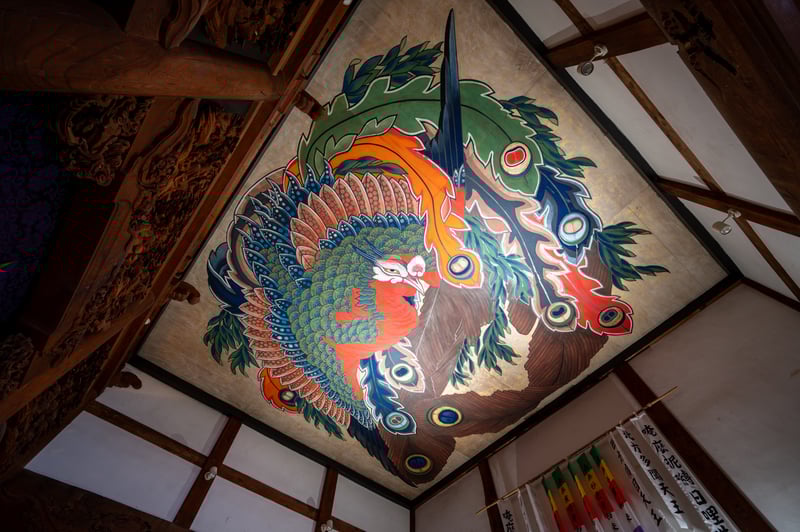
Katsushika Hokusai's painting of a phoenix at Gansho-in Temple
Following the Chikuma River east from Nagano City is Obuse Town, famous for its chestnut themed cafes and chestnut wood-paved streets. The famous ukiyo-e artist Katsushika Hokusai, who created The Great Wave off Kanagawa, temporarily stayed here during his later years, and you can see exhibitions of his many works at the Hokusai-kan Museum or his large ceiling painting of a phoenix at nearby Gansho-in Temple.
Zenkoji Temple
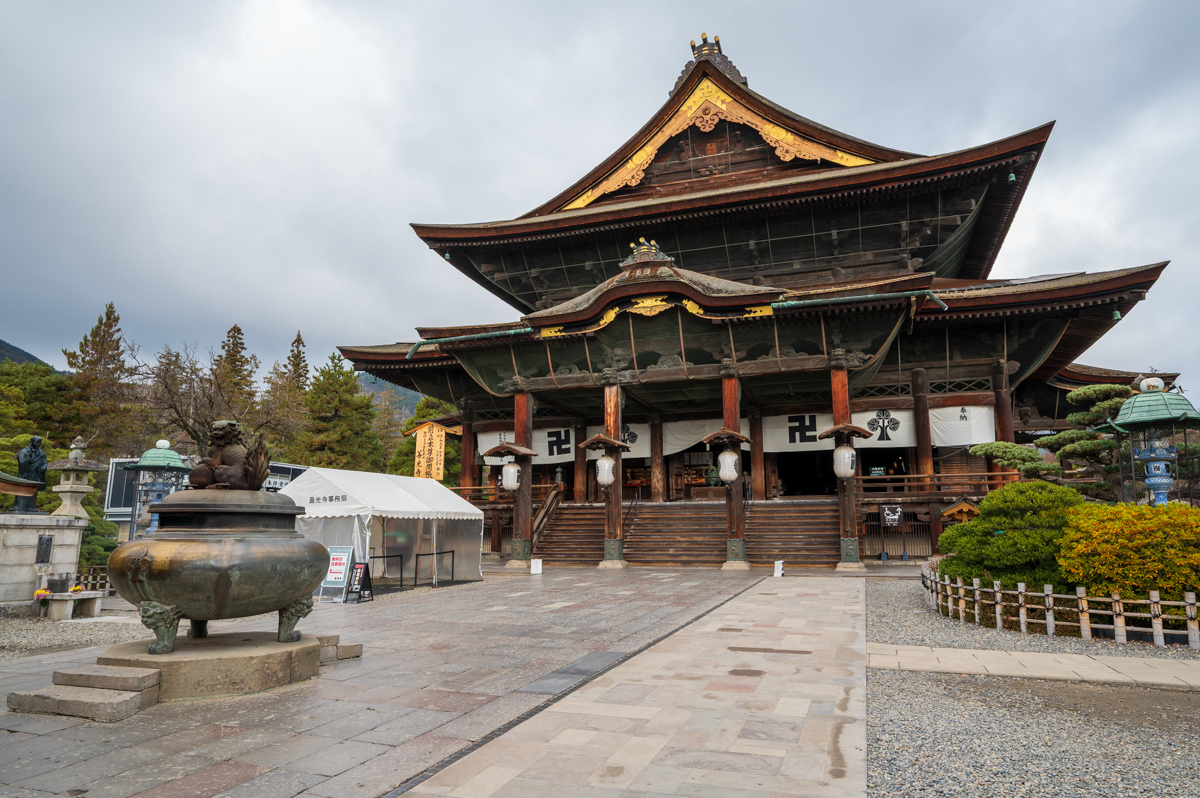
Come back further down of the Togakushi area and visit Nagano City. Famous for its Buddhist temple, Zenkoji, it has historically been a major pilgrimage site for travelers walking the Nakasendo Road from Edo (modern-day Tokyo) to Kyoto. Zenkoji is said to be home to Japan’s first Buddhist statue, brought to Japan over 1,400 years ago.
Matsushiro Town
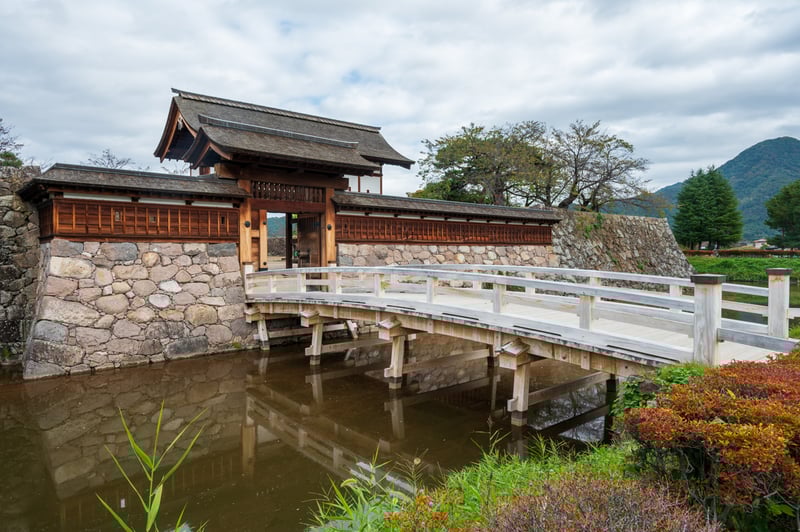
The main gate of Matsushiro Castle Ruins
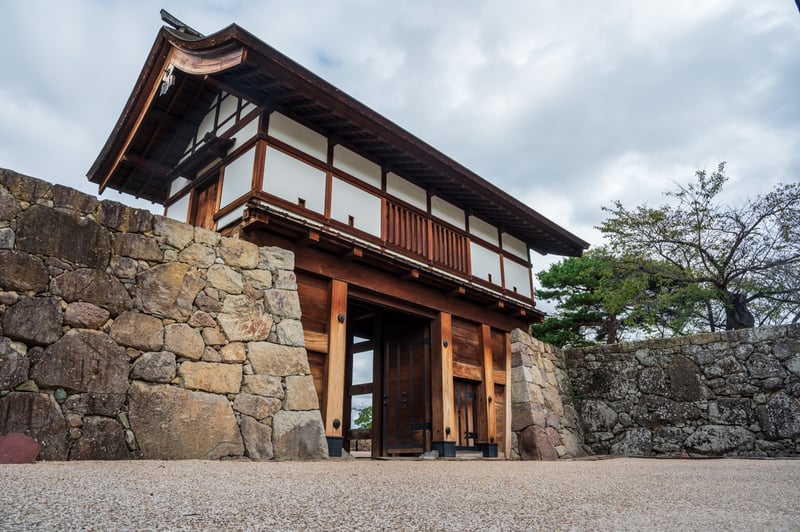
Inside Matsushiro Castle Ruins
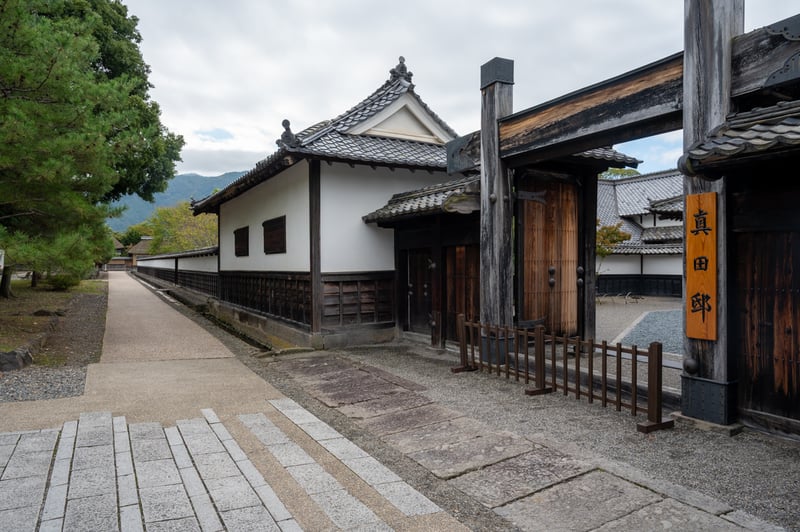
The Former Sanada Family Residence
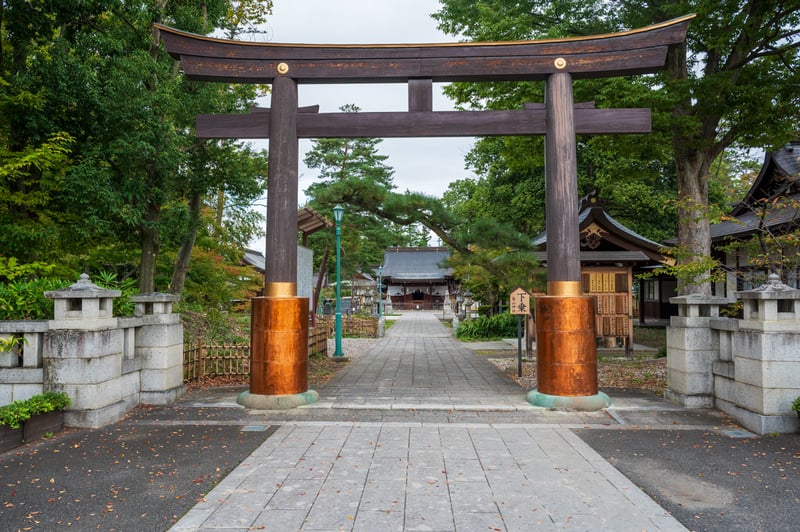
Zozan Shrine
Explore a historic town that’s just a stone’s throw from Nagano City. A former castle town, its streets are lined with pristine samurai residences featuring picturesque gardens. Take a stroll around its historical sites, such as the ruins of Matsushiro Castle, the Matsushiro Military and Literary Academy, as well as the Chikago bunker from WWII.
Where to Stay
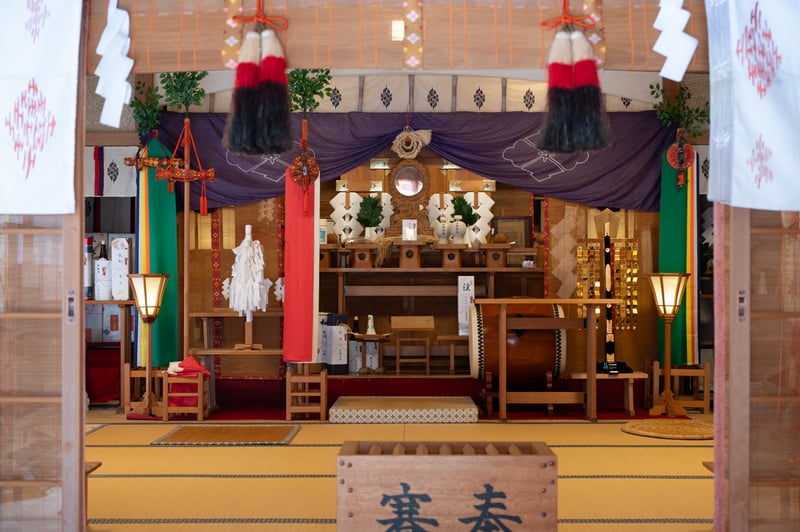
An altar inside Oyado Suwa temple lodge
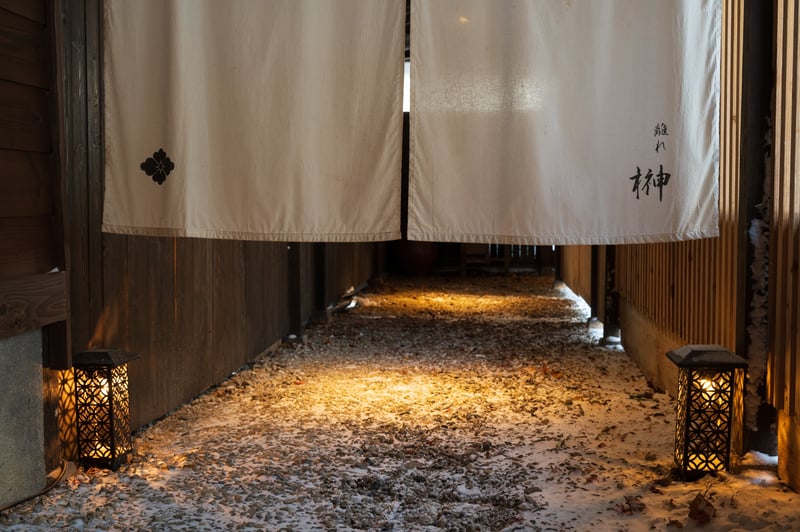
A pathway leading to Oyado Suwa's more premium accommodation option
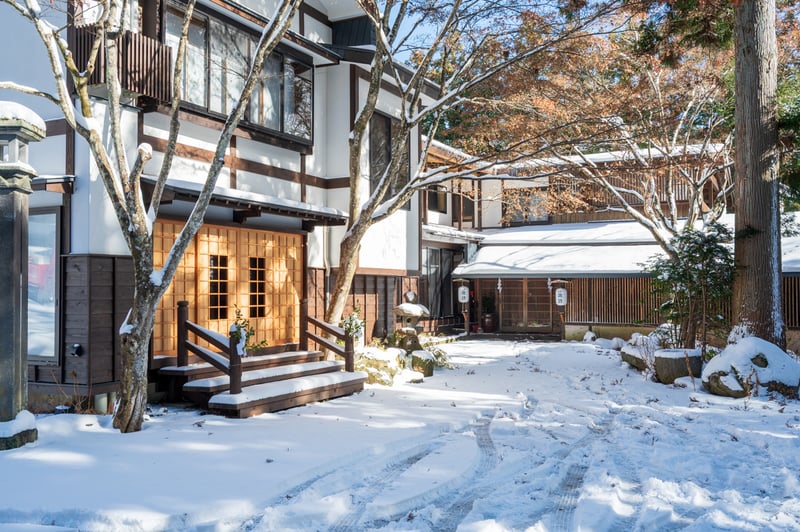
The snow-covered exterior of Oyado Suwa
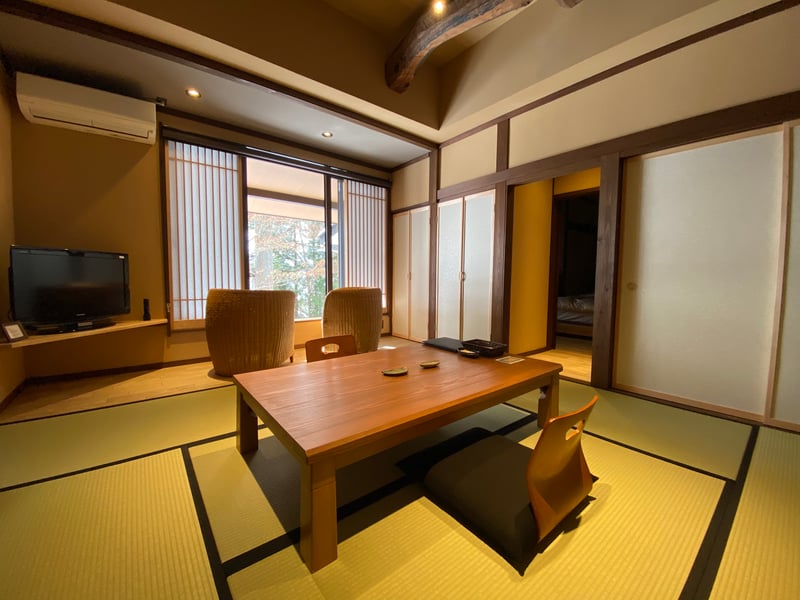
Inside one of the rooms
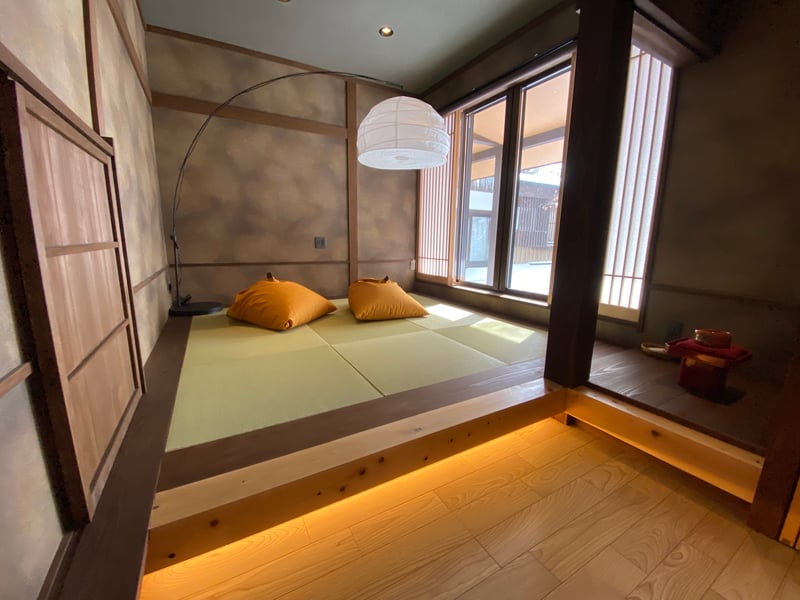
A cozy modern Japanese room
Most people will stay near Nagano Station, not within Togakushi itself; However, there are few temple lodges around Togakushi for those who would like to further experience the area. Temple lodges include Oyado Suwa and Oumeitei Tsuji. Another option is awai Togakushi, offering refined but minimalist spaces near the Chusha Shrine.