

Despite being just an hour and a half away from Tokyo by shinkansen, Nagano City is an entirely different world to Japan’s capital. As you explore around, Nagano’s charming downtown area soon gives way to idyllic fields of rice paddies, highland forests and the precipitous mountain peaks of the Japanese Alps—a perfect location to enjoy the outdoors while experiencing the culture of rural Japan.
On a four day tour around Northern Nagano, visit one of eastern Japan’s most venerable temples, walk a pilgrimage trail to the five shrines of Togakushi, hike up to one of Hakuba’s most scenic points and cycle through the countryside to the hot spring town of Nozawa.
Trip Highlights
- Visit 1,400-year-old Zenkoji Temple
- Walk the Togakushi Kodo Trail to visit Togakushi’s five shrines and its towering lane of cedars
- Hike to Happo Pond in Hakuba for incredible views of the Northern Japanese Alps
- Cycle through the countryside of Iiyama to Nozawa Onsen and soak in its soothing hot springs
Course Map
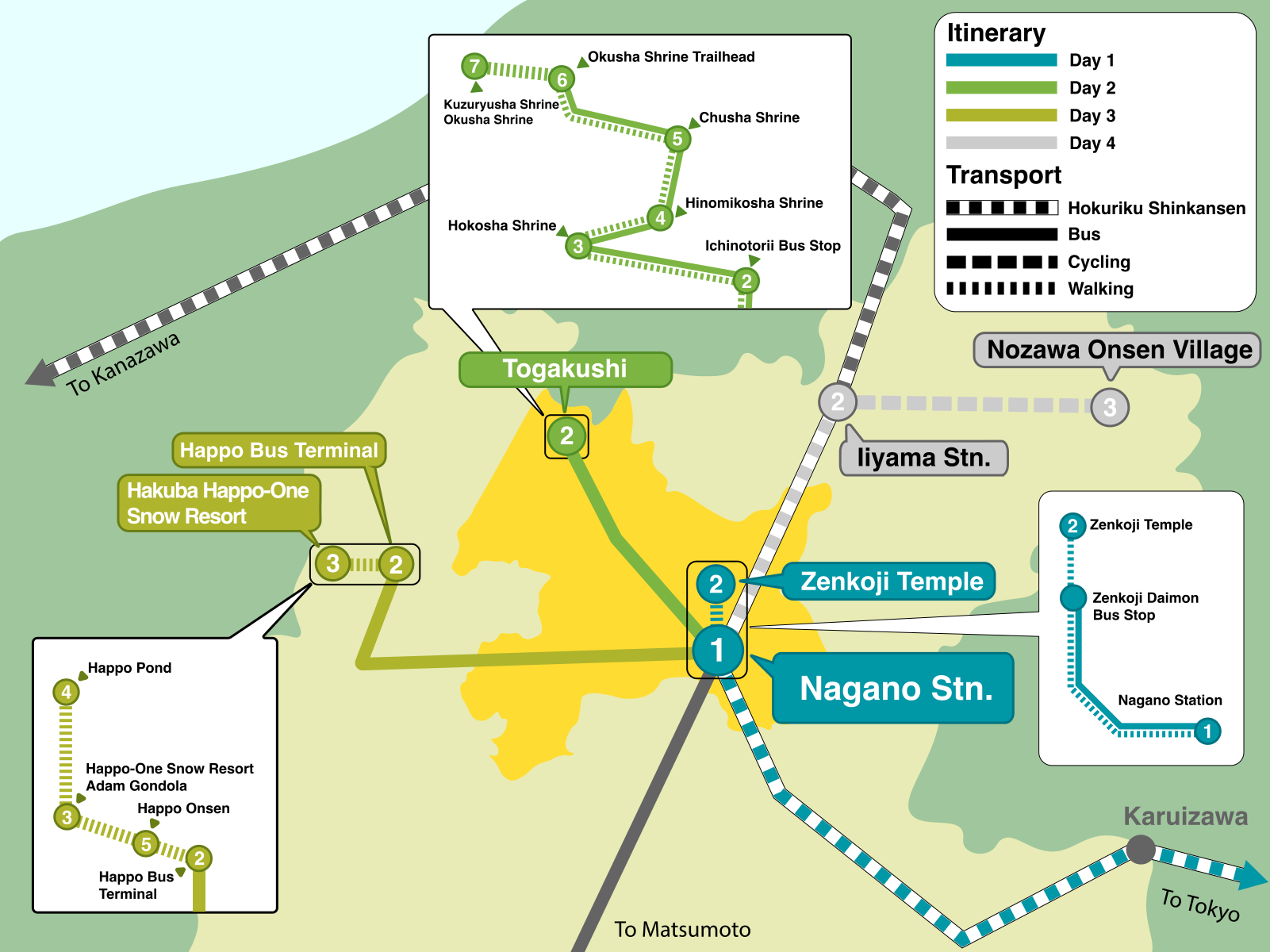
Itinerary
Day 1: Arrive in Nagano and Visit Zenkoji Temple
Nestled between forested mountains and alpine valleys, Nagano City welcomes visitors with clean mountain air and a relaxed, walkable downtown. After arriving at Nagano Station, check into your hotel and settle in—you’ll be based here for all three nights, making the city your convenient hub for adventure in every direction.
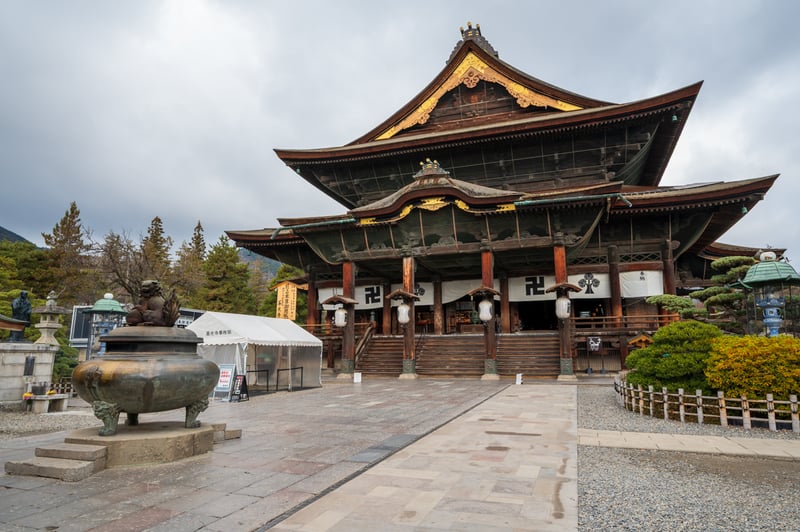
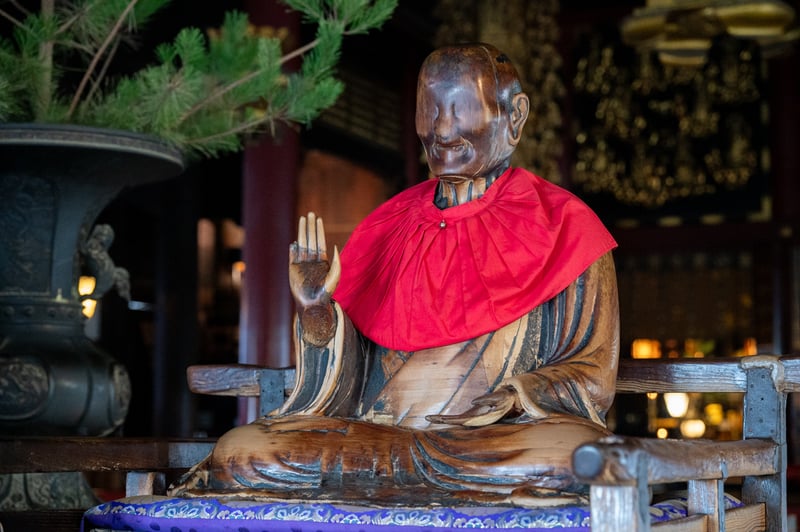
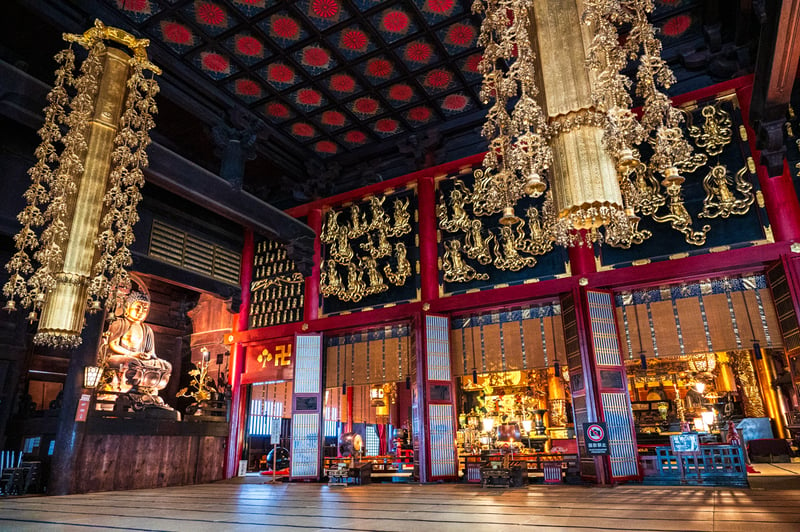
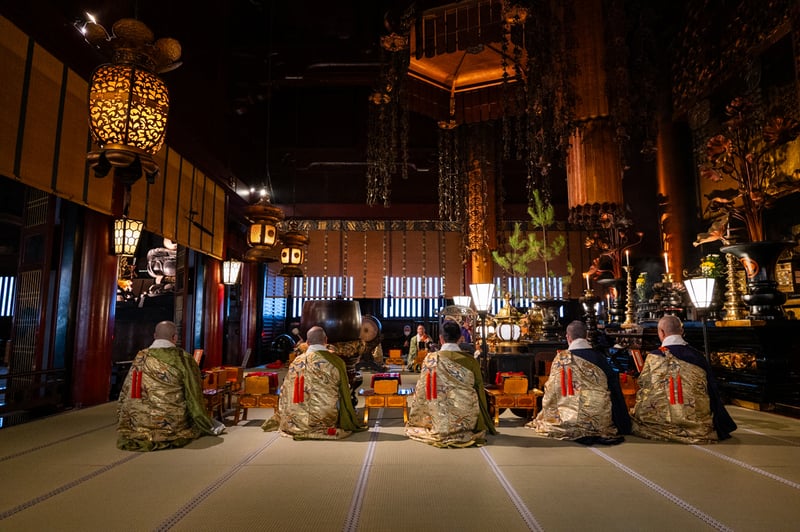
Zenkoji is one of Japan’s most important and inclusive Buddhist temples, welcoming worshippers of all faiths for nearly 1,400 years. It enshrines one of the oldest Buddhist icons brought from India to Japan, and for centuries, pilgrims have traveled here to pray for their health, happiness and rebirth in the Pure Land.
Visitors can explore the main hall, stroll along shaded paths on the temple grounds, and—if interested—participate in Okaidan Meguri, a walk through a pitch-dark underground passage below the hidden Buddhist icon.
Each morning, the head priests of the Daikanjin and Daihongan temples walk to the main hall of Zenkoji for the Oasaji service. If you line up before the service begins, the head priest will bless you with their juzu beads.
Day 2: Walk the Togakushi Kodo Trail
Leave the city behind as your bus winds up the road to Togakushi, a forested plateau at the base of its eponymous mountain. Five shrines are scattered throughout, and the Togakushi Kodo Trail connects them all. Walk along the trail, visit each of Togakushi’s shrines and take in the majestic views of its mountains and towering cedar trees.
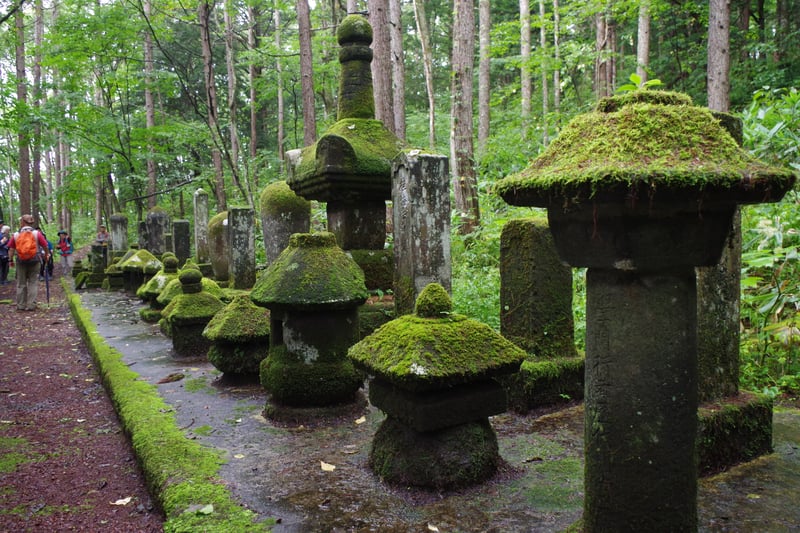
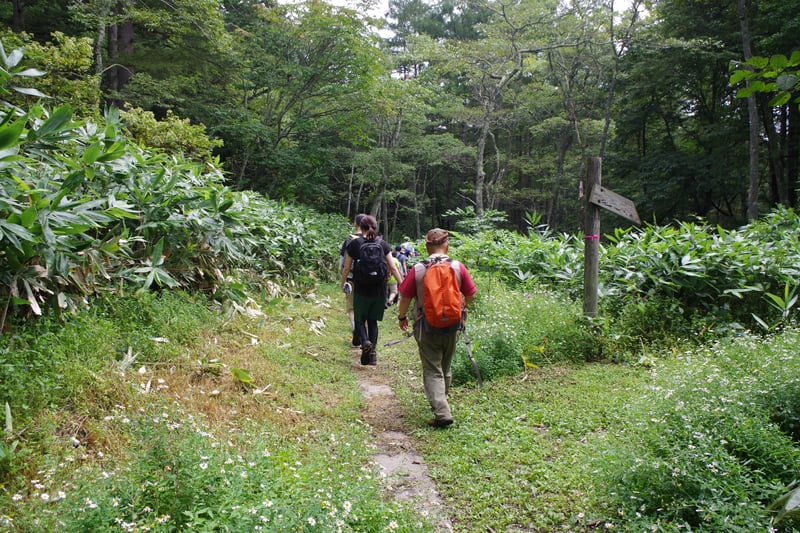

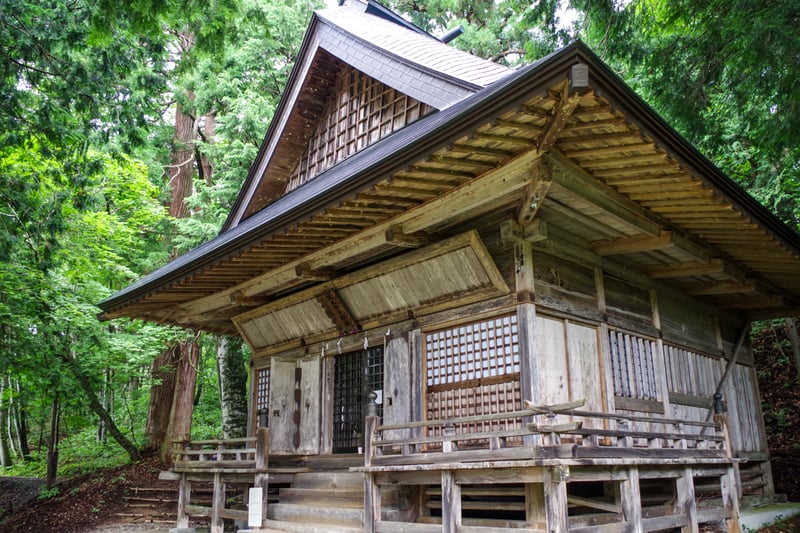
The Togakushi Kodo connects the five shrines of Togakushi, each of which enshrines a different deity that played a part in the Iwato legend to which Togakushi is linked. Along the way, it passes inconspicuous stone statues and moss-covered monuments weathered by the years, occasionally revealing views of precipitous Mt. Togakushi and quaint countryside hamlets.
The full trail takes about 6 to 7 hours to walk in full from Ichinotorii to the Okusha Shrine with a total distance of 14.5km. You can also get off the bus at the Hokosha Shrine instead for a shorter route of 5.5km taking about 3 to 4 hours to complete.
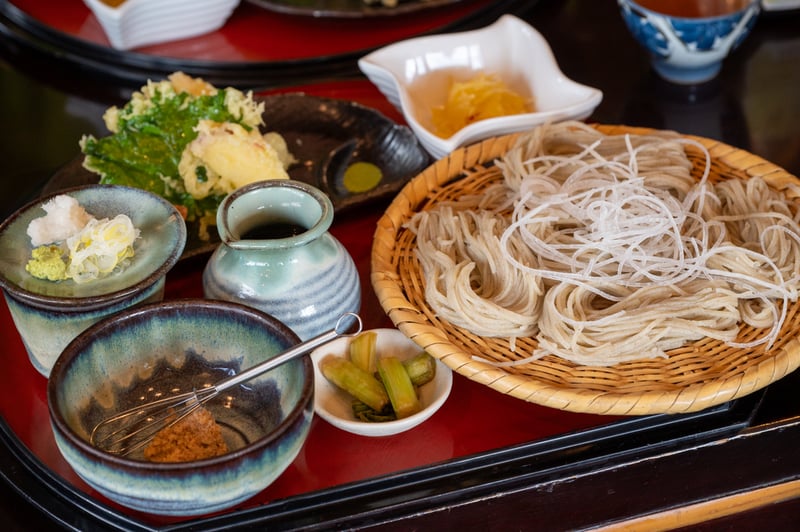
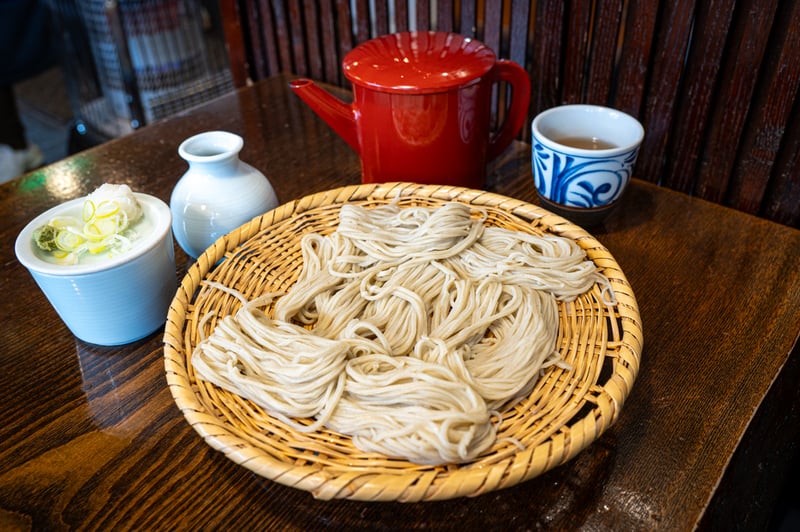
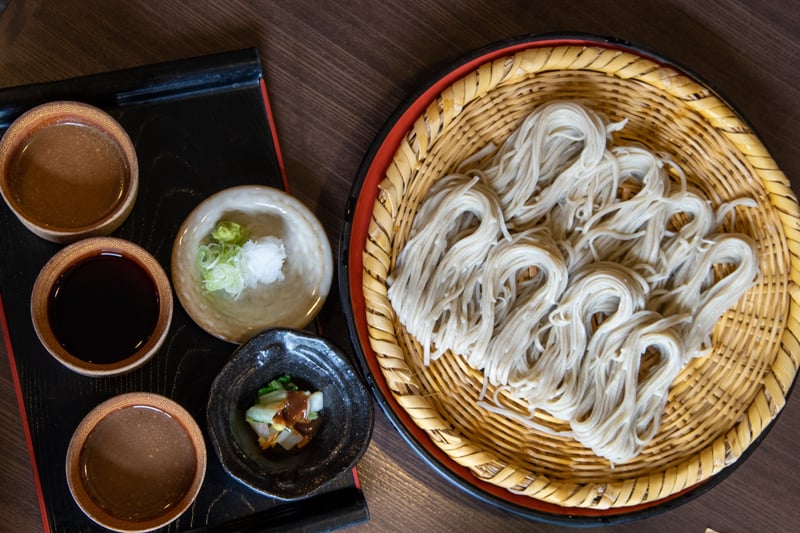
Togakushi is renowned for its handmade soba noodles, traditionally served cold with dipping sauce on the side. Made with locally grown buckwheat, these noodles are tender yet firm and have a nutty aroma. You can pair soba noodles with a plate of seasonal vegetable tempura or sweet soba dumplings.
At the base of the Chusha shrine are some Togakushi’s most popular restaurants, including Yamaguchiya – known for its ninja soba set and beers made with locally grown hops; Niomonya – offering soba sets with a trio of different dipping sauces; and Uzuraya, known for its sobagaki dumplings and kind service.
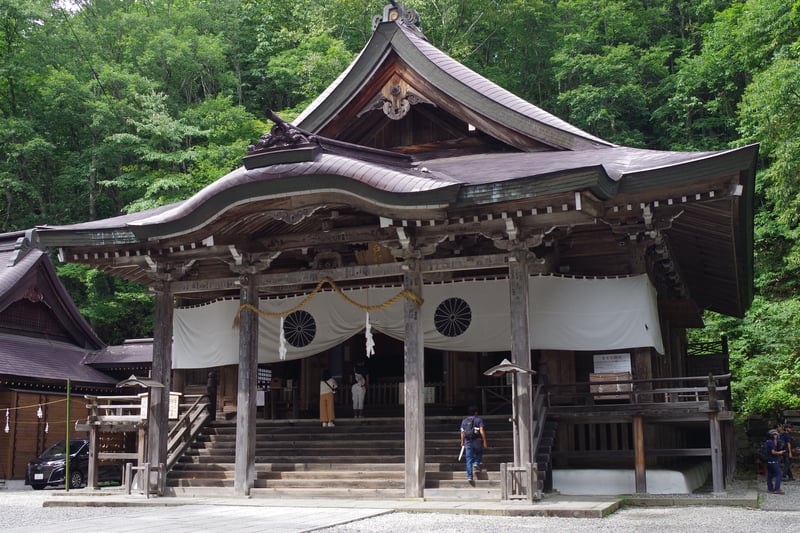
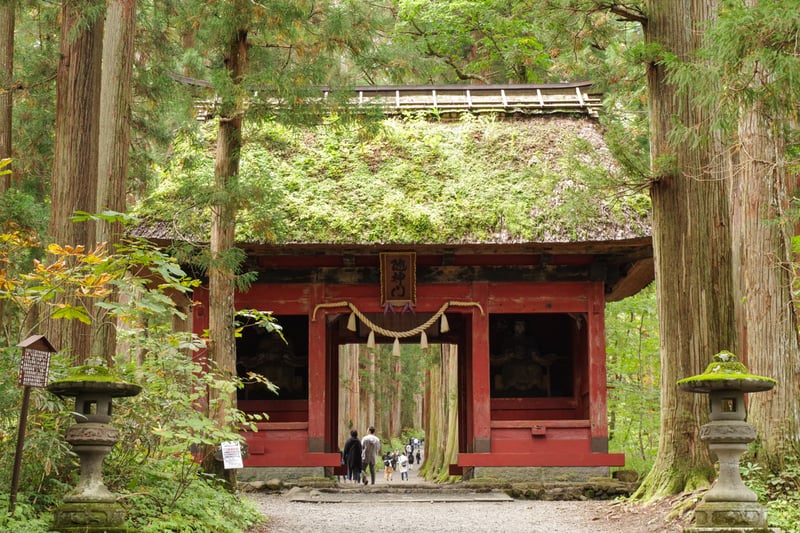
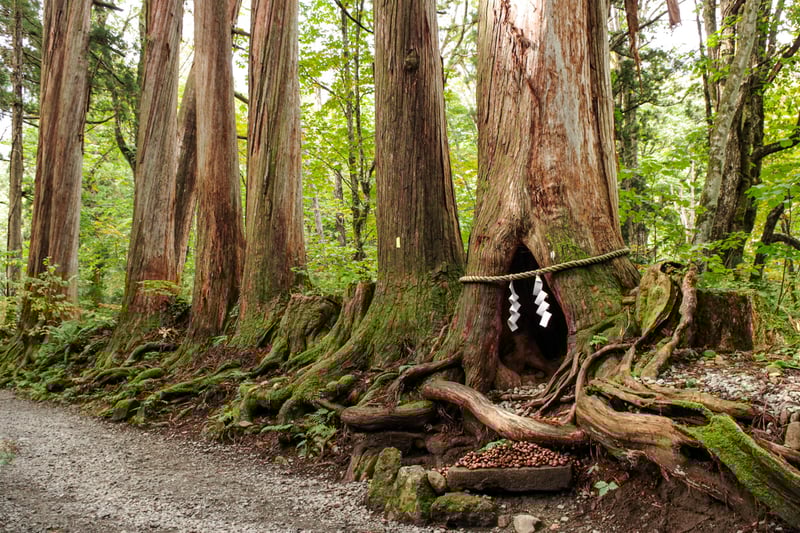
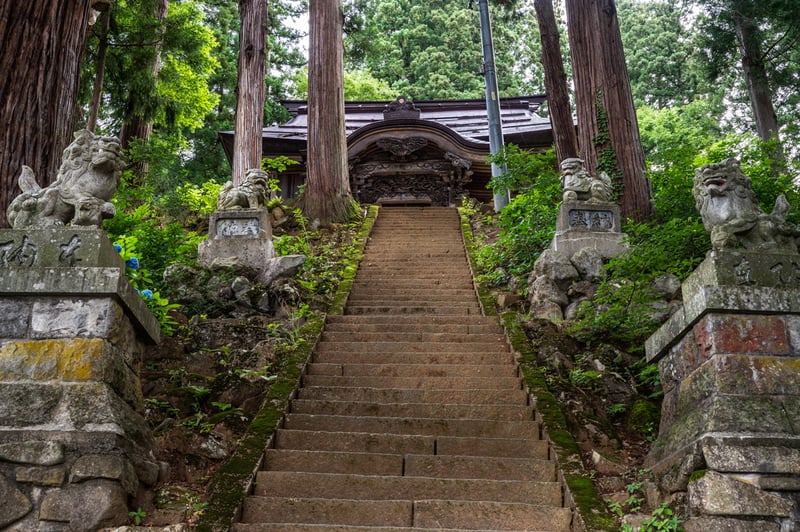
After lunch, walk up the approach to the Chusha Shrine past the large torii gate and trio of towering cedar trees. The main hall of the shrine sits at the top of the steep flight of stone steps, surrounded by tranquil forest. On the ceiling of the main hall is depicted a dragon, reconstructed from the original painted by the Ukiyo-e artist Kawanabe Kyōsai in the mid-19th century.
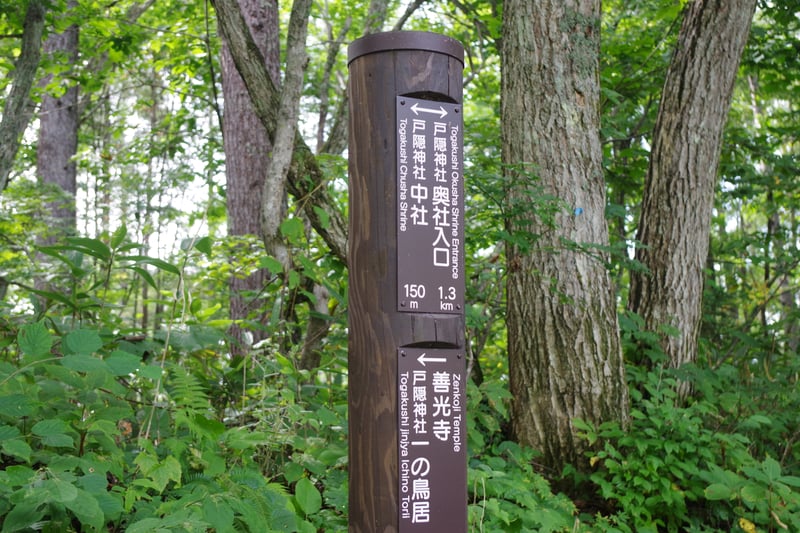
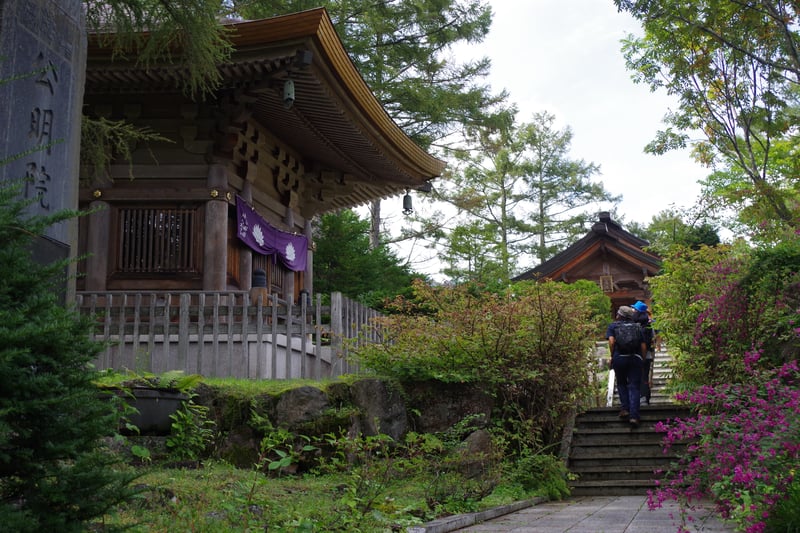
From there, continue along the trail towards the last two shrines: the Kuzuryusha and Okusha shrines. Along the 40-minute walk to the entrance of the Okusha Shrine, the trail passes Komei-in Temple, which offers picturesque views of Mt. Togakushi in the distance.
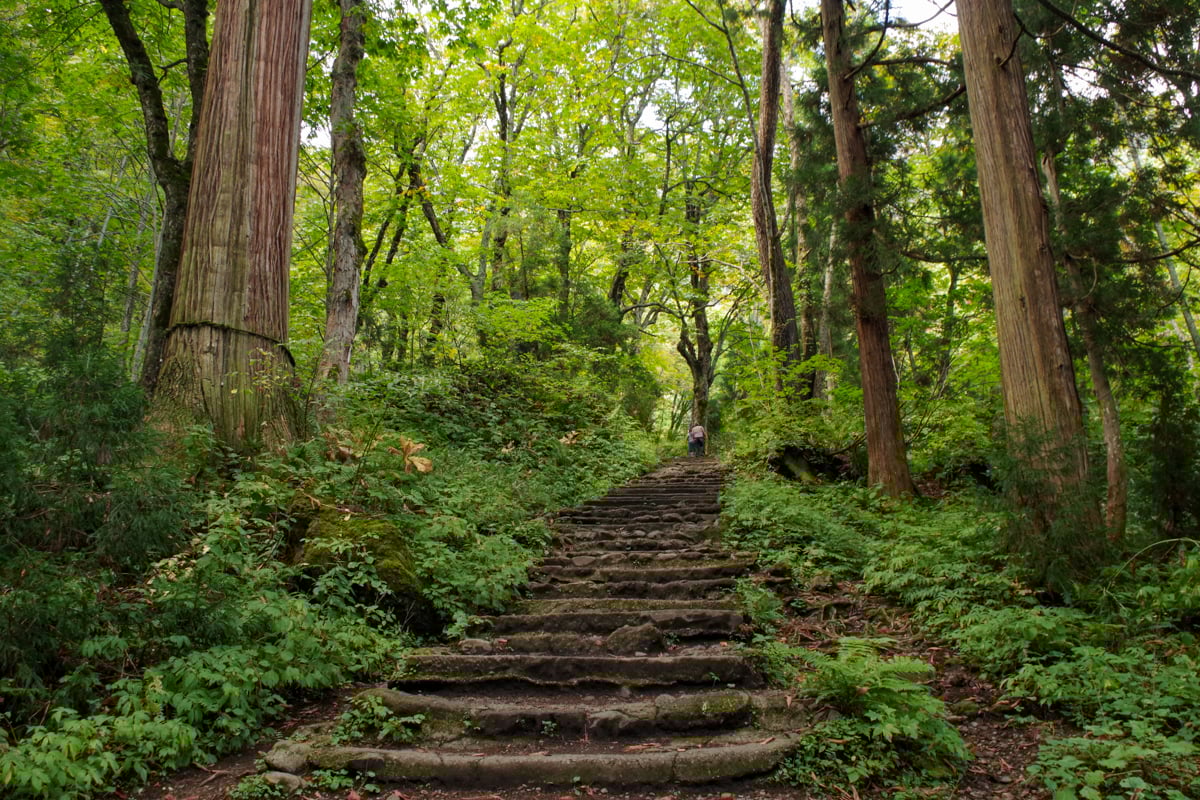
The final approach to the Kuzuryusha and Okusha shrines is one of the most iconic pilgrimage paths in Japan. Here, a magnificent avenue of towering cedar trees lines the route, some more than 400 years old. The atmosphere is hushed and spiritual as you walk the final stretch to the shrines, perched at the foot of sacred Mount Togakushi. The Kuzuryusha sits to the left, and the Okusha Shrine is to the right. Pay a visit to each before walking 40 minutes back to the entrance and bus stop.
Day 3: Hike up Hakuba Happo One Ski Resort to Happo Pond
On your third day, head from Nagano City to the Hakuba Valley. With the help of a ski lift, climb up to the top of Hakuba Happo One Ski Resort and reach Happo Pond for majestic views of the Northern Japanese Alps.
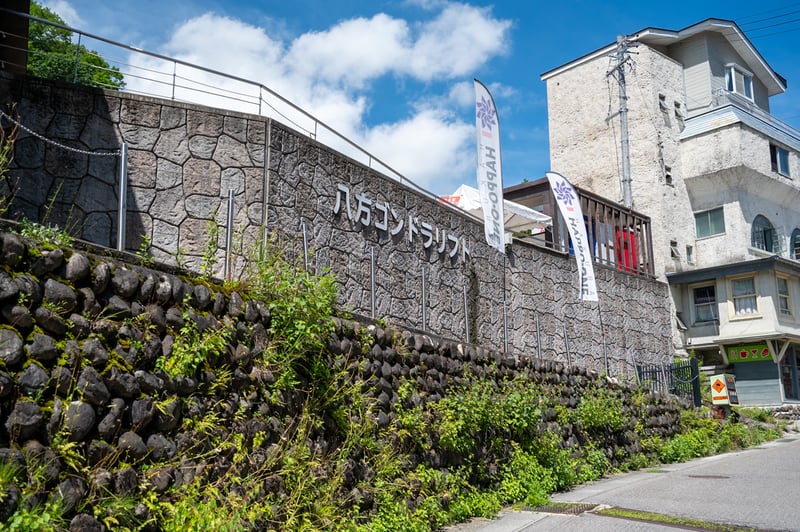
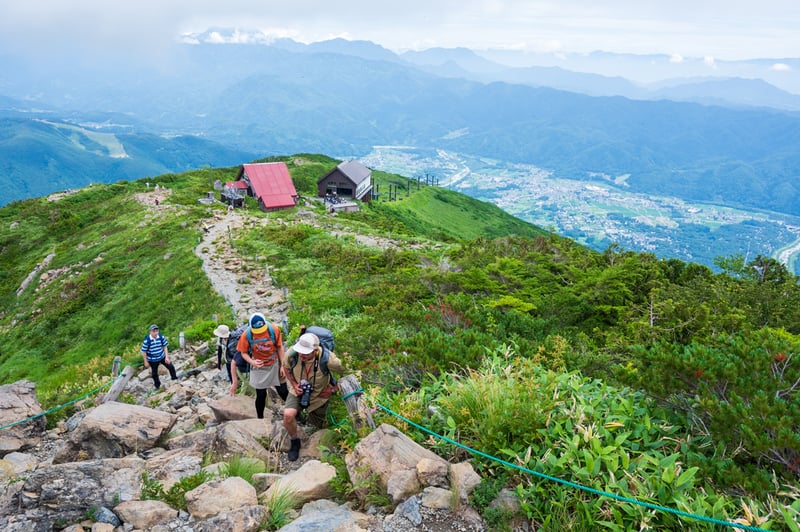
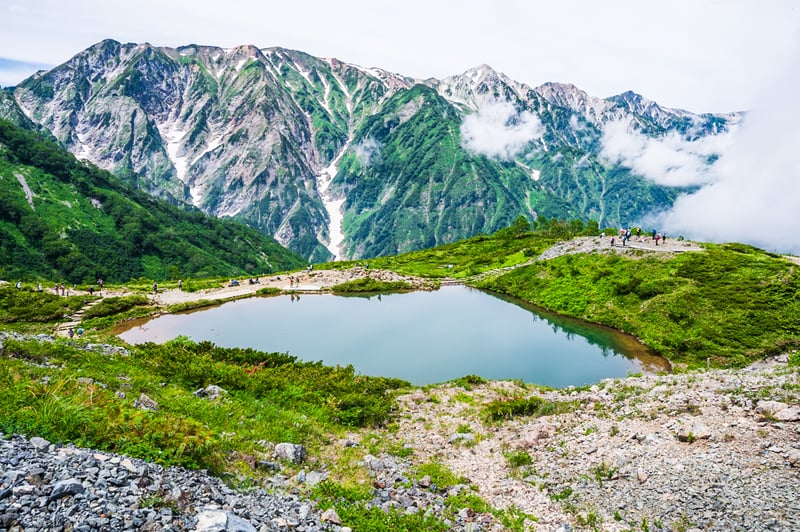
One of Nagano’s premiere ski resort destinations in winter, Happo One transforms into one of Japan’s most spectacular alpine hiking areas come summer. A combination of gondola and lifts delivers you to the top of the resort, where the trail to Happo Pond begins. The hike is moderately challenging but richly rewarding: alpine flowers bloom along the path, and as you climb, sweeping views of Hakuba’s Sanzan mountains (Mt. Hakuba Yari, Mt. Shakushi, Mt. Hakuba/Shirouma) open up.
At the summit, Happo Pond reflects the mountains like a perfect mirror—one of the most breathtaking natural scenes in Nagano and a highlight of any summer adventure.
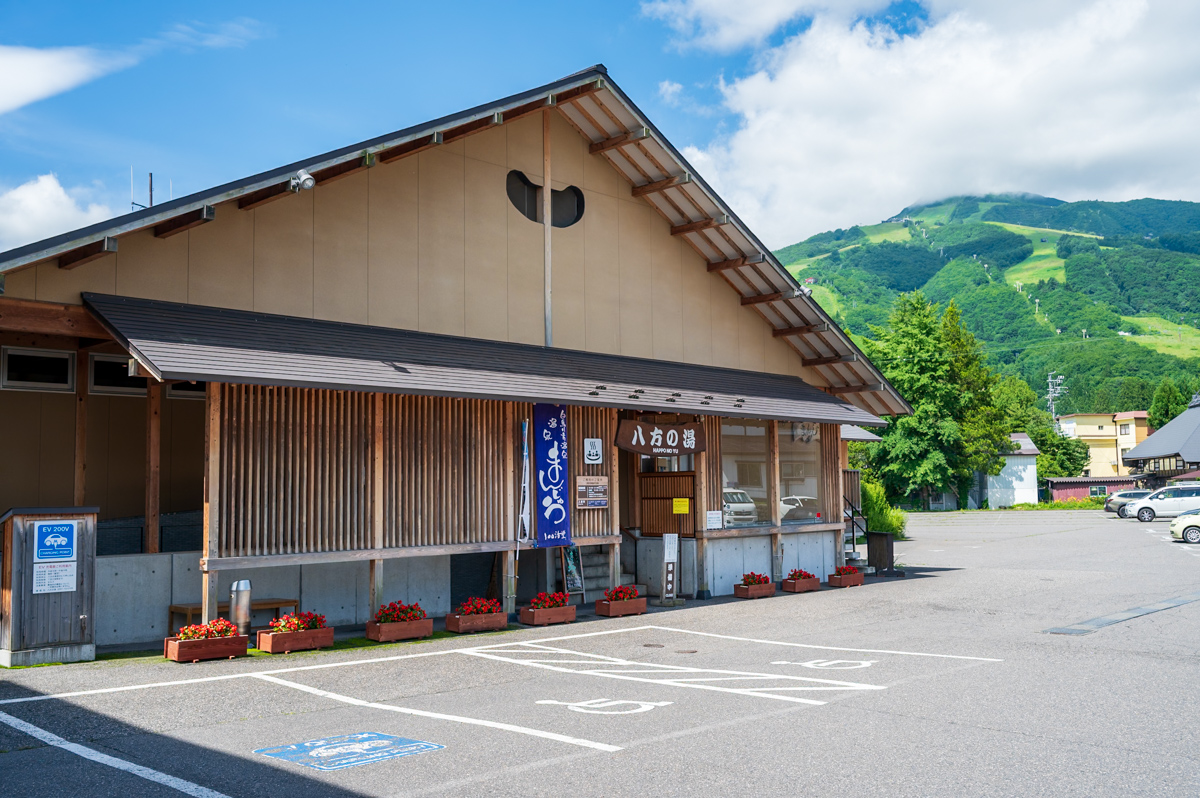
After descending, unwind in Hakuba’s mineral-rich Happo Onsen. The water here is highly alkaline, leaving your skin remarkably smooth and your muscles happily relaxed after a day of hiking.
Day 4: Cycle through Scenic Countryside to Nozawa Onsen
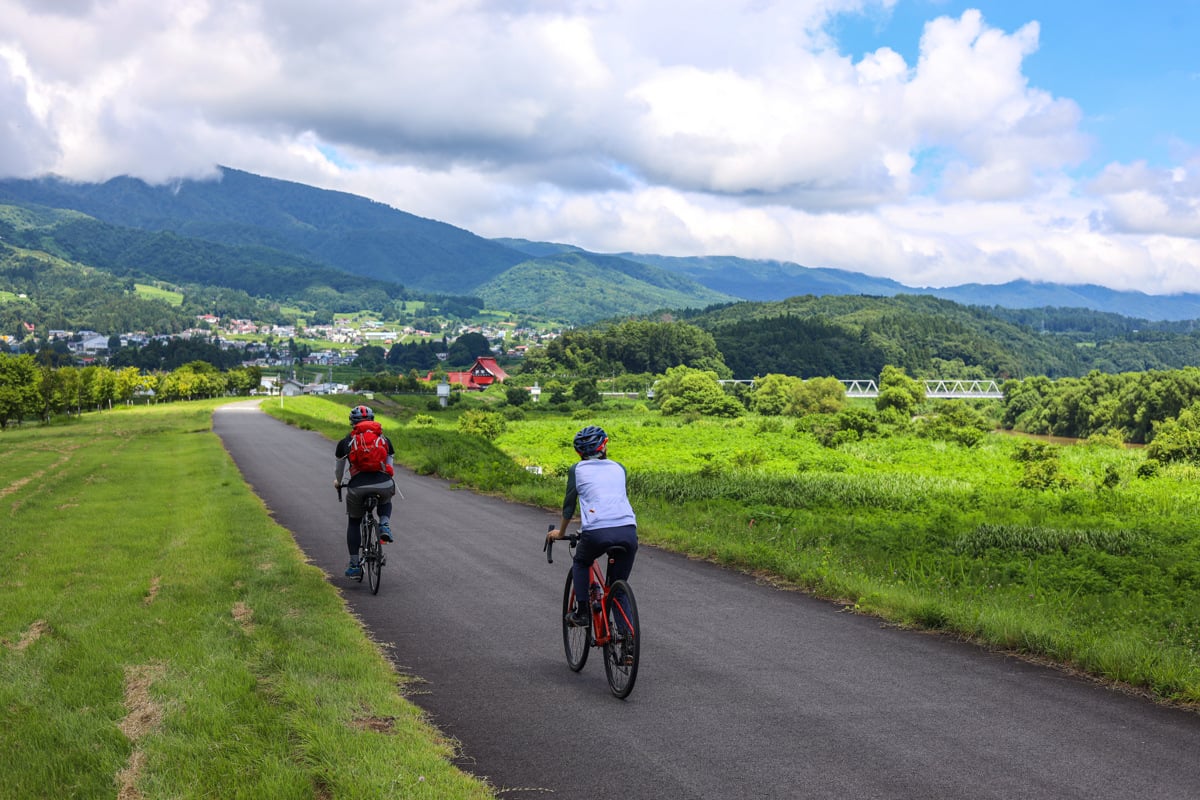
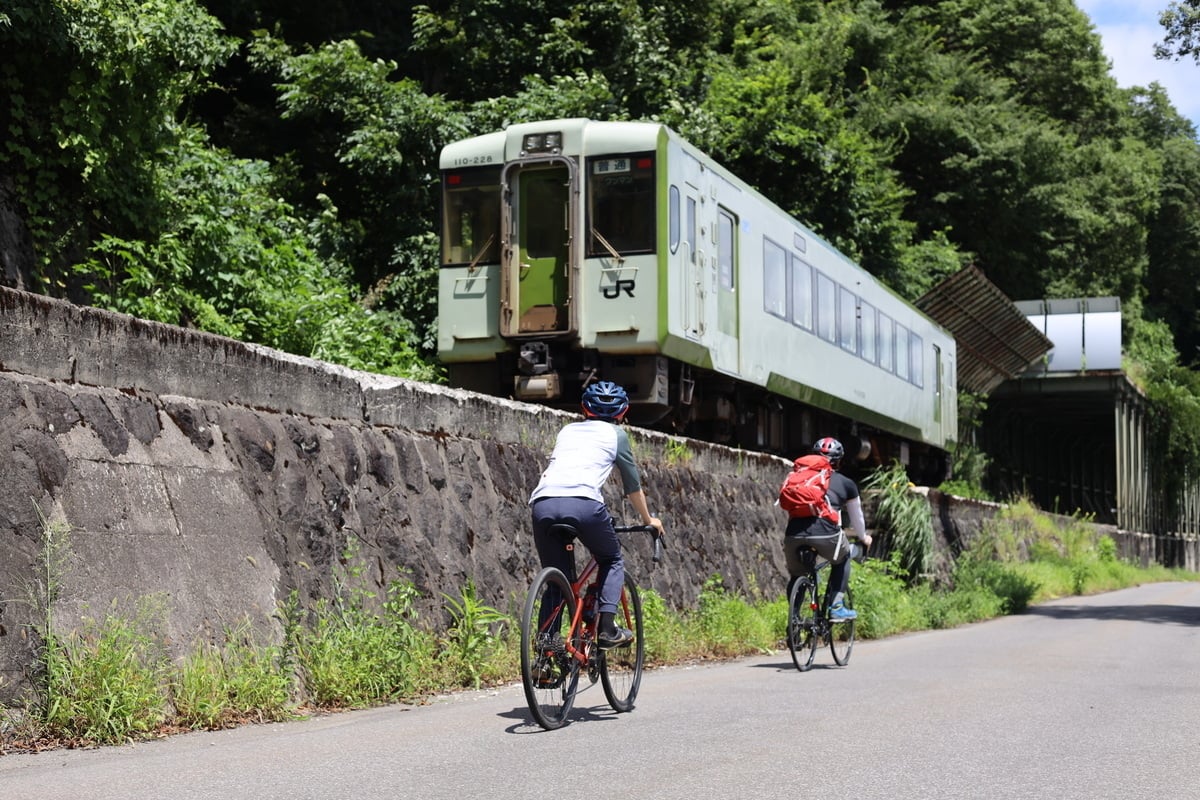
On your last day in Nagano, head north towards Japan’s snow country. Cycle through the rural landscape of Iiyama, crossing the Chikuma River and passing quiet hamlets, fields of flowers and ancient temples along the way.


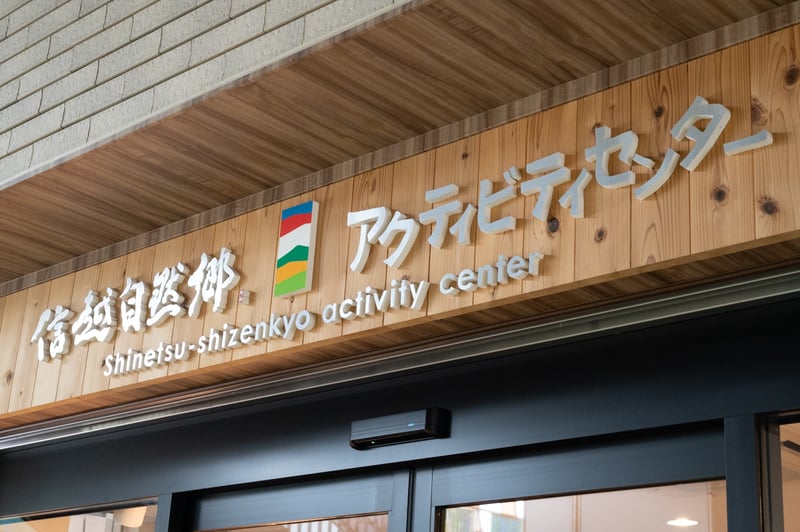

Located inside Iiyama Station, the Shinetsu Shizenkyo Activity Center not only rents and sells a variety of outdoor gear, but also serves as an information center for the area in a 20km radius of the station. They can arrange many activities here, from trekking and hiking to canoeing and rafting, and in addition, they themselves offer cycling tours. Rent the bicycle of your choice (e-bikes also available!) here and grab a map for your journey.
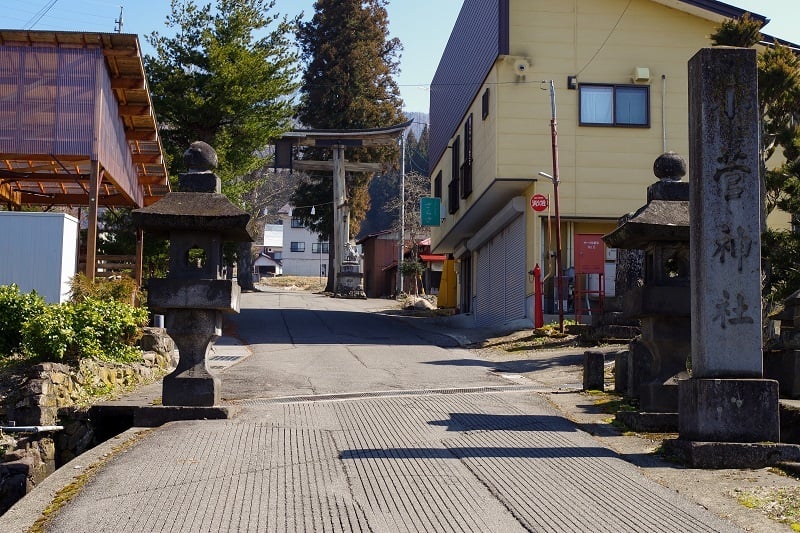

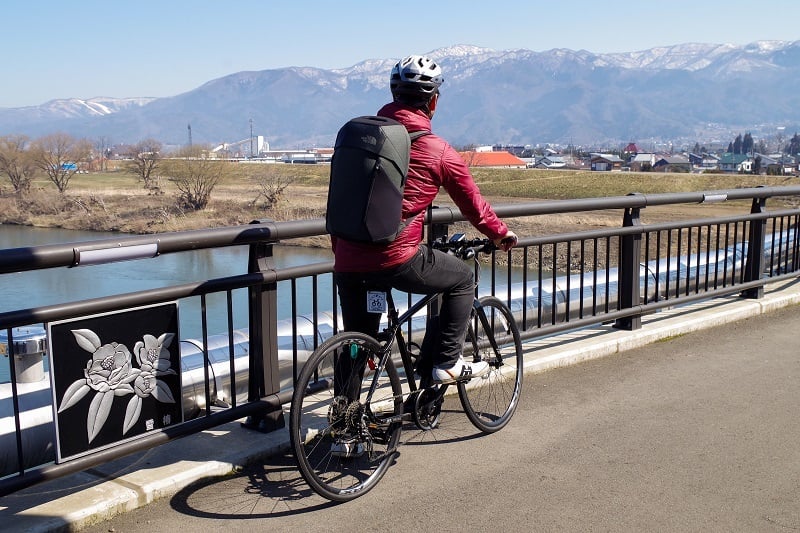
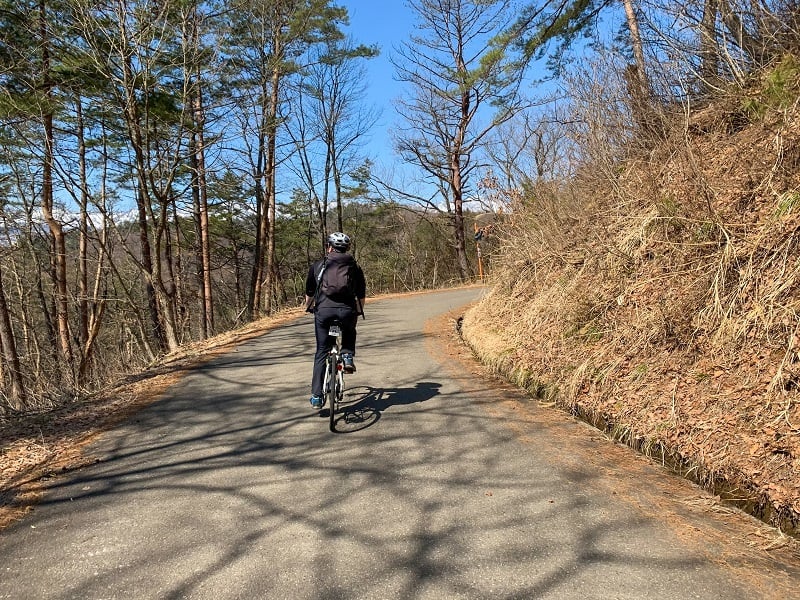
Depart from Iiyama Station heading north towards Nozawa Onsen. After crossing the Chikuma River, you’ll ride along a quiet, countryside road with fields of rice paddies sprawling around you. Notable stops along the way include Nanohana Park, where a carpet of yellow canola flowers bloom in spring; Kosuge Shrine, a haunt for mountain ascetics tucked away in the forest; and Lake Hokuryu, a small but picturesque lake where you can ride paddle boats or try standup paddleboarding.
Once you’ve arrived in Nozawa Onsen, you can drop off your bike at the tourism information center (for an additional fee).
Details
Distance: 16.7km
Time: 4 hours
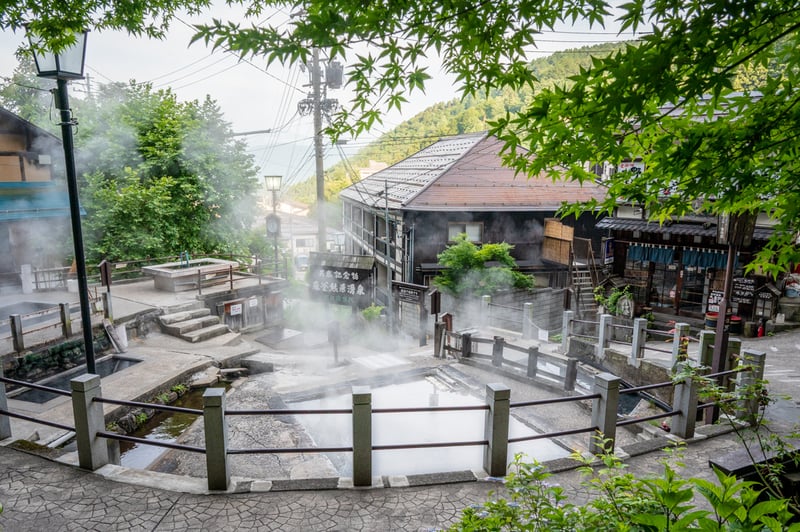
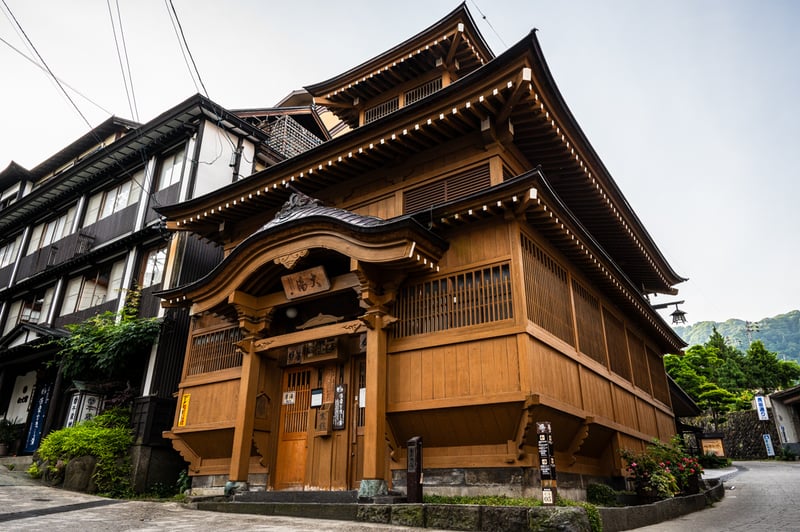
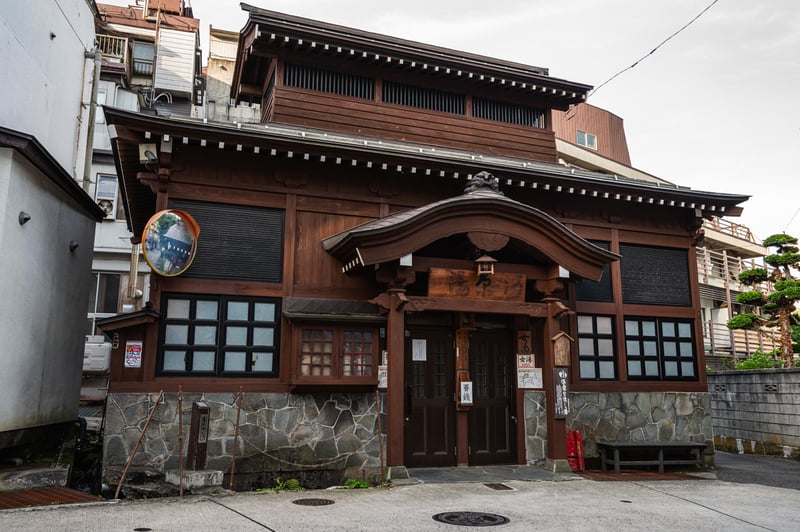
Take time to stroll through the village’s winding streets and climb up to the Ogama hot spring area, where locals boil vegetables and eggs in natural geothermal water. Visit Kenmeiji Temple before heading back down towards central Oyu Street for some souvenirs or a dip in one of Nozawa’s soto-yu public hot spring baths. For those who don’t want to fully disrobe, you can also use one of the towns footbaths to relax after a long ride.